Masthead
Editors-in-Chief
Leon Sebastian Barros
Natalee Cruz
Managing Editor
F.M. Papaz
Editorial Directors
Stephanie Berger
Jackie Braje
Tova Greene
Editors
Lisette Boer
Ayling Zulema Dominguez
Dylan Gilbert
Haden Riles
Venus Solomon
Associate Editors
Hazel Alexandra
Kenna Devalor
Willow Randall
Annabelle Roses







Editor’s Note
Dear Readers,
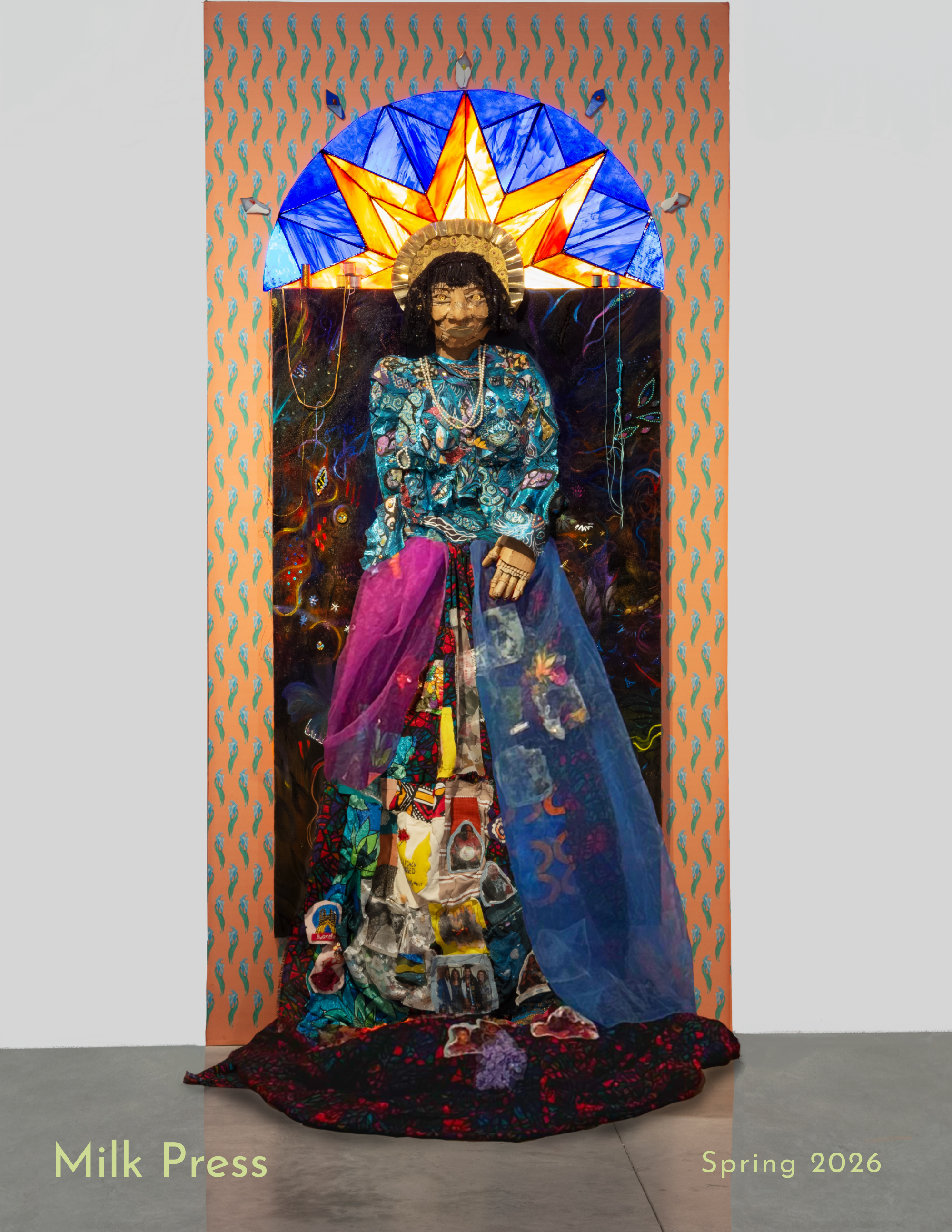
Poets are not record-keepers. They do not, as it were, recount histories, nor do they describe the world simply as it is (as if that was ever simple). What poetry and the arts offer is perhaps not the big picture, but a thousand small ones, each a microcosm of the way we live and have lived. In this issue, you will find our contributors asking you to look closer, across memories and places, to see how the emotional truth interrupts and links these moments together. As Anya Johnson writes; “One year an east coast relation sent me a plastic evergreen, doll-sized. I cried openly, the blunted needles unpluckable. At six my father left.” Cover artist Sabrina Thompson’s “Because You Loved Me” is literally stitched together by memory: photographs and figures of her family’s past come together to make grand sculptures, creating a rich work overflowing with memory.
It is perhaps a poet and artist’s job to observe and remember. But remembering is not as simple as we allow ourselves to believe. Sabrina Tenteromano writes “My life / Consisting of / Stories that didn’t / Happen to me, / But whose effects / Reverberated / Through space / And time / To meet / Me here.” Our relationship to our past isn’t static; it changes as we do and changes the way we live our present. The poets and artists know this, observing and remembering with great detail and depth, allowing us to better understand the moment and the lives we inhabit.
In the spirit of close observation, we are very excited to feature for the first time, work from our very own editors, in the form of book reviews. Editor Ayling Zulema Dominguez, reviewing Sofia Aguilar’s Streaming Service, writes, “I love poems that do not turn away from our collective sites of grief and trauma but rather tell me honestly how they are dealing with it.” This is how we at Milk Press strive to form each issue, by collecting poetry and art that is fearless and relentless, that refuses to look away, and that capture moments worth remembering.
Forever yours,
Leon Sebastian Barros
Natalee Cruz
Editors-in-Chief
Reece Borden
WHERE IS MY BROTHER?
He’s just there, right over that hill
That never seems to get larger or
Smaller the nearer or farther I am
From it. Every once in a while, a thin
Twister of smoke rises from that direction
And I’ll light my own fire in response,
But I think he’s just clearing brush
To make room for the new growth,
And I’ve only managed to burn
The ground beneath my feet.
Reece Borden is a writer and actor in Brooklyn. He is the creator of an original TV pilot, ‘Texas & Alexis,’ and his poetry has appeared in Poetry Is Gay Zine. Summertimes he directs mythology-based quests for kids’ camps.
Anya Johnson
GRASS, PINE, PEONY
Once I knew God: eleven acres, three woods, a creek in winter. Horses mucking in the fields. I knew green, red. Old friends. Orange Volkswagen spitting weeds. Mailbox corrosion brown. Electric fence I held long grass to, little zaps all rainbow-colored. On my birthday, we fished paper trout from the bridge, dad up to his neck in stream, feeding lines of braided yarn, pneumonia yellow. The farmhouse steps groaned. At harvest we hung apple rings from the rafters. Christmas we carried firs on our back, feathered them with pale straw angels. One year an east coast relation sent me a plastic evergreen, doll-sized. I cried openly, the blunted needles unpluckable. At six my father left. Matching necklaces for my sister and I, turquoise cylinders spaced with silver. I chased the blue Chevy pick-up for miles. I could name all the colors.
Anya Johnson’s fiction, poetry, and essays have been published in POETRY, Only Poems, Pembroke Magazine, Afternoon Visitor, Hobart, and on poets.org, among others. She received an MFA in poetry from Sarah Lawrence College, where she was awarded an Academy of American Poets University Prize. Anya is Only Poems’ inaugural Bob Hicok Fellow and an Editorial Assistant at Fonograf Editions.
NAIL SCULPTURES
Woomin Kim
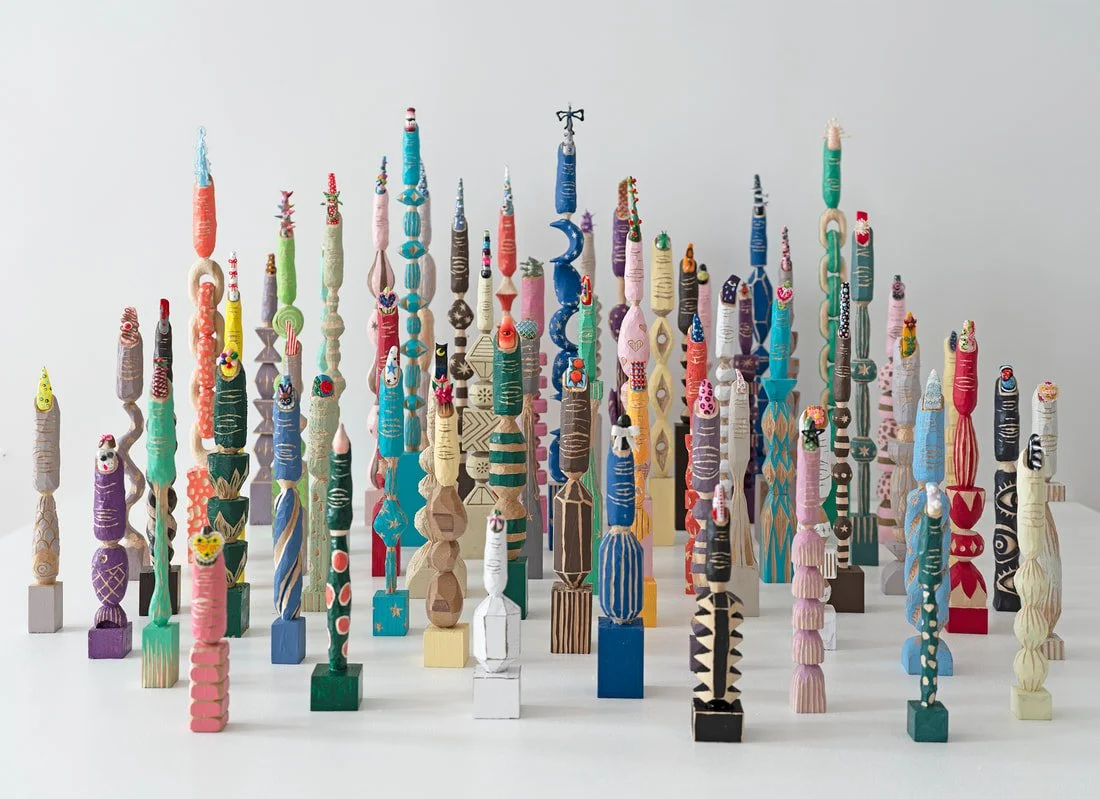
Quilting and whittling, I work closely with material. Textiles and wood are everyday materials, always close to hands and the body and adequate for describing subjects of my work: personal spaces of friends and family, street markets in my hometown in Korea, General stores in my Queens neighborhood.
In Shijang Project, I made a series of textile collage that describe Korean street market vendors such as fish market, shoe store, and fabric store. Seen all together, the installation questions the xenophobic or romanticized Western narratives of Asian markets, and offers new ones that feel more accurate to me, which are energetic, safe, vibrant, and lively.
My recent project, Sohn, which means hand in Korean, is a love letter to hands and their meticulous and joyful relationship with craft. At the same time, I celebrate a new genre of a craft: nail art, and the complex mixture of beauty, joy, expression, labor, craftmanship, gender, and immigration of the artistry.
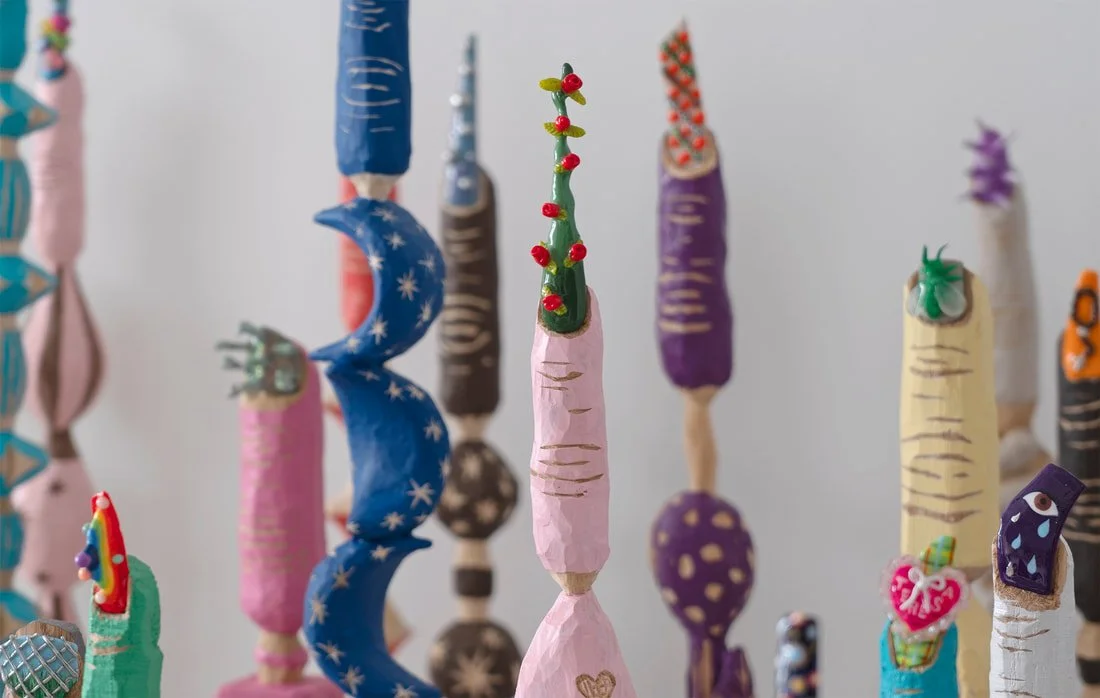
The work is several dozen hand carved wooden sculptures each measuring seven inches to two feet. The lower parts of the sculptures are carved into abstract shapes and top parts into fingers. They are painted and engraved, and manicured artificial nails are attached on the fingertips. The long vertical shapes and their grouping conjure impressions of candles, totem poles, monuments or Kokdu dolls (traditional Korean wood craft that were made to decorate funeral palanquin).
Woomin Kim is a Korean artist currently based in Queens, NY. In her textile works and sculptures, Kim describes sceneries and memories of everyday life and urban landscapes that feel personal and precious to herself.
Kim’s work has been exhibited at the RISD Museum, Bronx Museum, Hood Museum of Art, Cincinnati Art Museum and the Moody Center for the Arts. Kim has participated in residencies at the Queens Museum, Smack Mellon and Art Omi. Kim collaborated with the Isabella Stewart Gardner Museum, Noguchi Museum and American Folk Art Museum for various workshops and programing. Her works have been featured in The New York Times, Hyperallergic and BOMB Magazine. Kim received a B.F.A. from Seoul National University and an M.F.A. from the School of the Art Institute of Chicago.
Ayaz Muratoglu
There is a soldier.
He is in the occupying army.
And there is a house.
With a frame.
And an entrance. Near a cave.
How can it fit all these men and their thoughts.
They are all there in a row looking at the cave.
Under the green trees.
And gold.
The men in the painting do not know of the aunts near their caves, the ones who pour boiling water on soldiers and dance under the hot sun.
In the painting the cave is the shape of a coffin.
The man also knows of linen. And little pieces of gold that float in stitching. And the tailors who would wear a little needle on their lapel in Algiers. For craft.
It’s all coming up Lazarus.
This miracle cave.
Near the other cave: a blockade.
Most soldiers are children.
Are you. Looking.
A chorus of women.
Who danced with flowers. Lifting out of the ground.
A rose and then a poppy. Rose poppy poppy.
A flower opening.
They stuff bullets into dates. The ones that are soft and juicy and eaten before breakfast. With coffee.
Hide rifles under ruffled skirts. Flowered patterns.
Arrange a wedding march through town. Stack dates filled with bullets in spirals on a wide dish.
Parade the dates through town.
With music playing.
And rugs stuffed with rifles.
While soldiers sit dumb.
The cave and the women.
Parading the goods.
Under music.
And prayer.
Do you like dates. Do you like dates. Do you like dates.
Do you like the color of the date with the bullet stuffed inside.
Do you like revolution.
And boiling water.
Poured over a soldier in the street.
It takes skill to sew the bullets into the side of a skirt. And to peel so many tomatoes that the hand grows weary. And to position the pot of boiling water on the balcony so it lands on the soldier’s head. And to thread a needle. And to use gold thread. And to gossip in the courtyard.
And bread of course. And dates. And roses.
The cave has an entrance.
Which means there is also an exit.
Few things please me except dinner. And boiling water.
And the park that became police station getting turned back into park.
And the cave opening.
And the dates bursting.
And the cat landing properly on the table.
Some combination of myth and geography suggest that these caves—the one with the women and the guerilla fighters, the one full of Lazarus—are close to one another. The ancient story and the recent one.
The cave in Lebanon and the cave in the myth.
The women are laughing at the soldiers, on account of their size. And position.
The boiling water and the dates are waiting for many hands.
They see shadow under the bright sun.
They watch closely.
They keep track.
They dance in circles.
They spin around beneath heavy platters, patterned terracotta laden with dates.
They twirl.
They whirl. They turn.
The cave and the other cave, and its resurrection.
Turn and look at the soldiers.
With the whole body. Every inch.
Laugh at their small faces.
Their tight pants.
Watch them trip over their own feet.
Land backwards, by the man coated in linen.
The men gathering around the entrance.
Their mouths washed clean of meaning.
Unable to tell their feet apart.
Or the sand from the cave.
The trees.
The soldiers run back to the cave and the women and their sons and uncles and nephews and sisters.
They’ll have the whole desert.
SKILLED TRADE
Ayaz O. Muratoglu is a poet, essayist, and translator in New York. He studies Islam at Union Theological Seminary.
Simone Parker
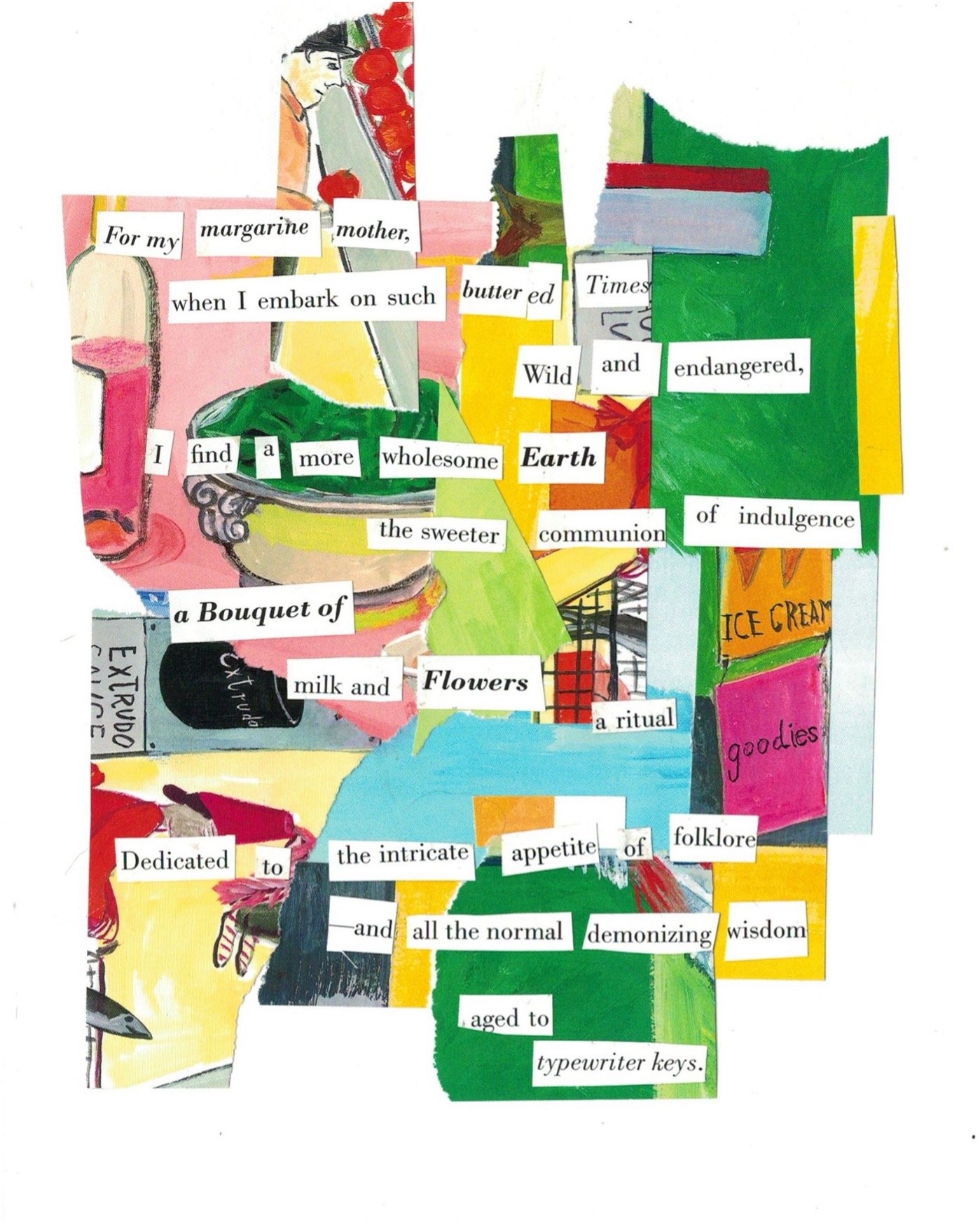
FOR MY MARGARINE MOTHER
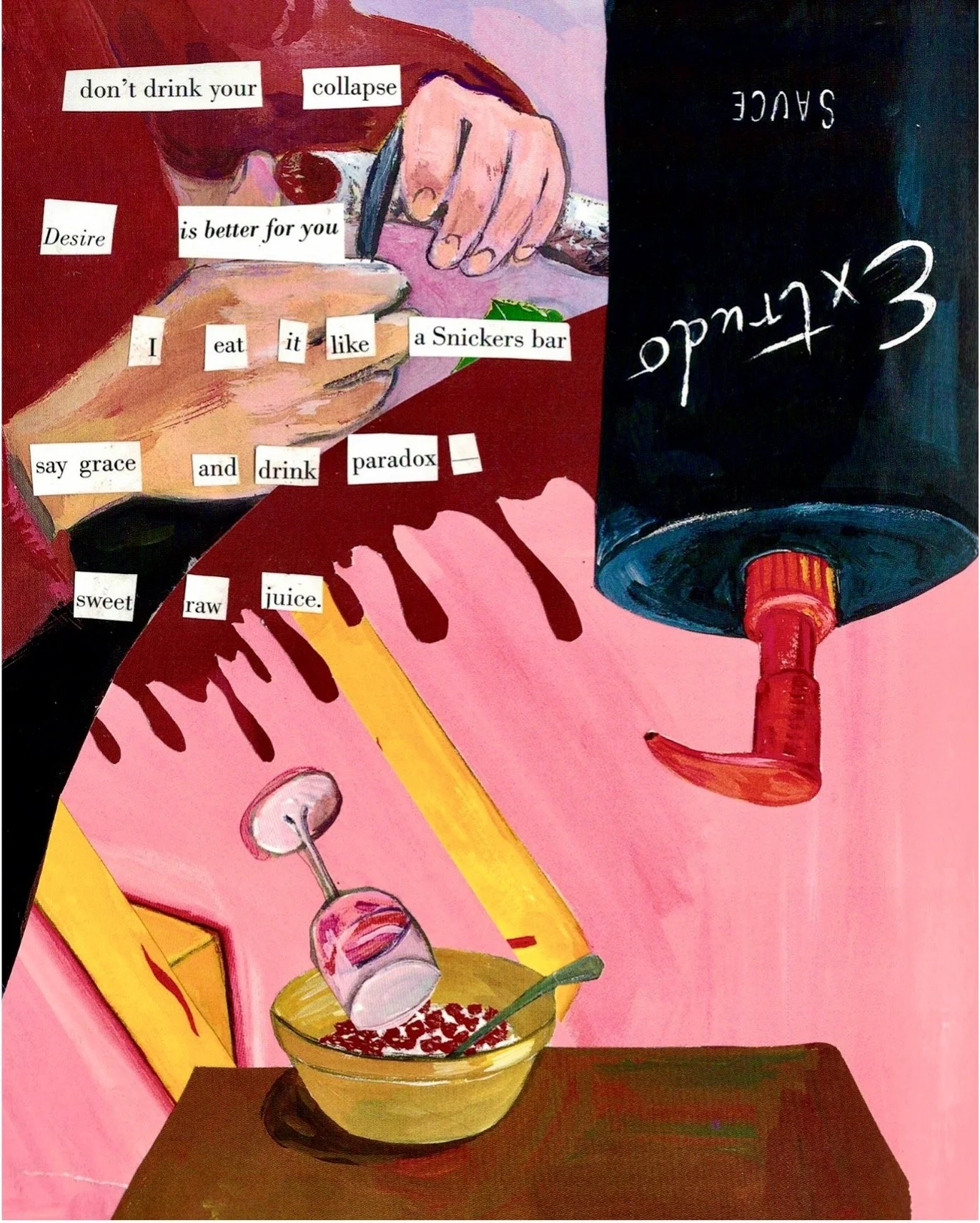
THE SAUCE
I took scissors to the book Food Rules by Michael Pollan to create these two pieces, “For my Margarine Mother” & "The Sauce", because I believe food shouldn't have rules. These pieces give the reader permission to throw away the diet culture rule book and indulge innocently, free from guilt, in food. In doing so one can discover a gentler and more forgiving world. Food is sustenance and happiness, seed oils and wine and chocolate bars included. Let no one tell you otherwise.
Simone Parker is a poet & collage artist from Minneapolis. She is the author of missing e. (Fernwood Press, 2025), a collection of cut up poetry from Tumblr. Her work — which has been featured in wildscape., The Garlic Press, North Star Collage, The Talking Stick, and bitter melon review, among others — engages with themes of pop culture, girlhood, queerness, and coming of age in the internet era.
Untitled Queen
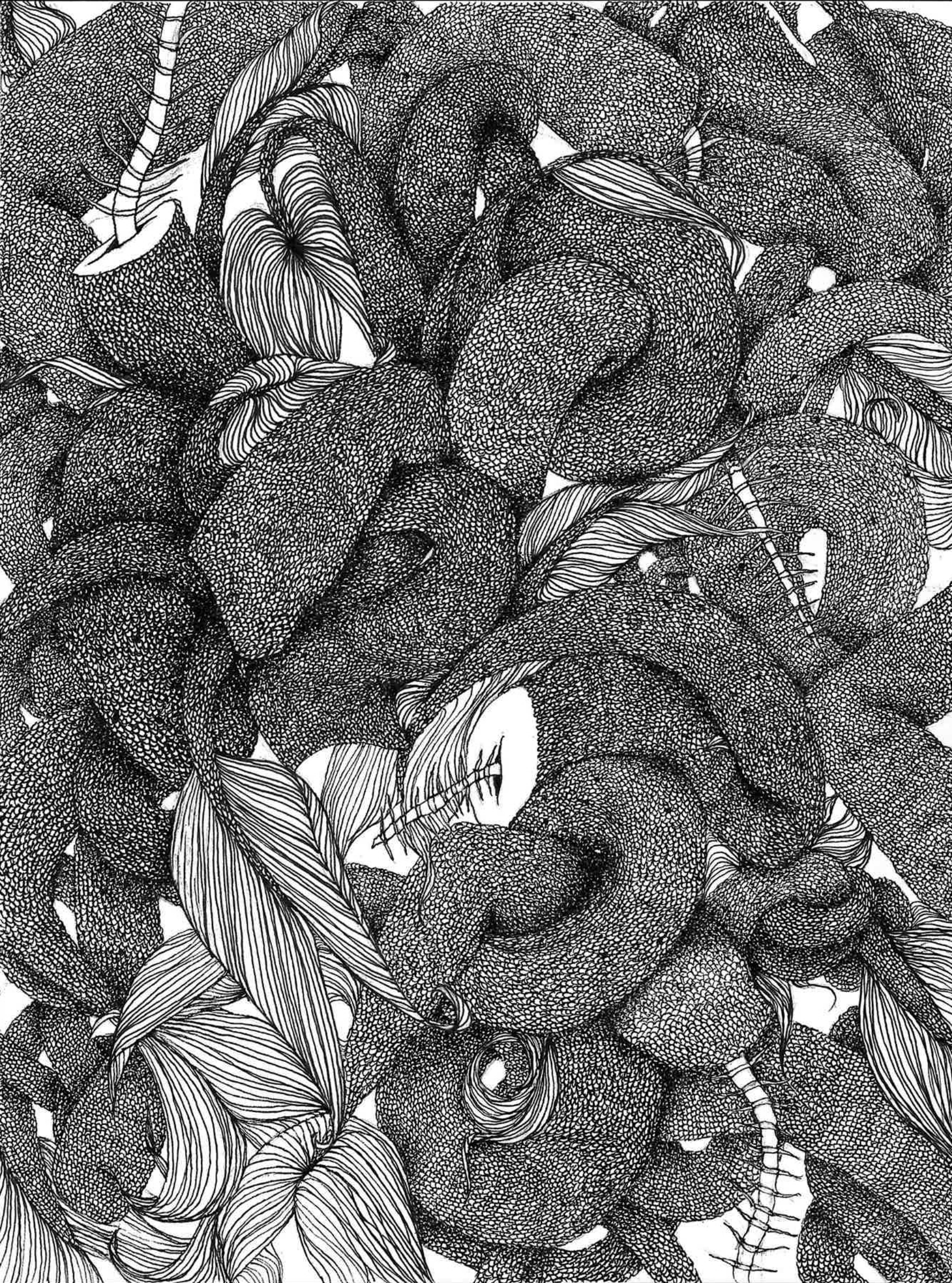
EMBARRASSMENT OF FISHES
Untitled Queen is a Boricua / Filipinx drag artist residing on the stolen land of Lenapehoking (so-called Brooklyn). She tells decolonial stories through emotive performances combining poetry, drawing, projection, and installation.
Miriam Saperstein
LULLABY IN RIVERING TONGUE
before all the rest, the tree
sloughs off
oh my bedraggled
leaf, my tiny, wind-drifted wordlet,
petiole-snapped from veined
syntax, bespoken and befallen,
of great trees, a mess
of now-yellow leaves adrift
on the surface of a river
open, wild, turning over
the detritus of city
settle, settle.
dwell, dwellers. soothe
me, shekhina, rest upon
enlighten me, oh oil-layer,
teach me to praise with your rivering tongue.
slick, ablaze, driven as an eel
elliptically—chaser
of tails, eyeless and biting,
vibrating the stills,
churning the crawdads
from their slot caves.
settle settle
dwell,
dwellers soothe
me shekhina, rest upon
not here, the crawdads pince their threat
not here, the lilypadded shudder with amphibious plop
settle settle
well,
dwellerssoooooooo the
shekhina, rest upon
not here, the clouds gather for mincha and disperse
away, away,
drags the current
me, this time, last year.
fisher-people police the riparian
edge, catch and throat, angling for
lossy and glossy, mommy forever
she wakes me up and lays me down
as the fish
settle settle
ooooooooooooooooooo
shekhina, rest upon
lick me, oh river, with mothering tongue
silt-dragged from bed and bank, make for me
an inscription in the book of words, the life of a beast,
in the knowing of names, incantatory
a tznius current rubs out
one name then the next of g!d she dragged her tongue
across the silt that fell. what once was leaves, left
to the depths
amulitic, this cycling
grammar, the motion
of covering up, of g-d
she dragged her tongue on river bed
ooooooooo l’olam vaed
lolamvaed
l”d
eel-d motion of repetitious vortex
knowing then forgetting
to trust, tweaked
shoulder in archival dance,
drag me, place me, make me
one
settle settle shekhina, rest upon
ooooooooooooooooooooooooooooooooooooooooooooo
Miriam Saperstein mourns alongside rivers, tracks air quality through their pathologized body, imagines rhizomatic trans-affirming body modification, and collaborates with disabled humans and other ecological beings to create accessible arts programming and rituals. Recent work includes co-curating a Haptic Gallery with disabled artist collective Hook & Loop, and serving as access coordinator for SEPTINDECIM, a radical ecology exhibition at School of the Alternative. Their work has been exhibited at Waterway Arts and the Black Mountain College Museum + Art Center and is published or forthcoming in The Encyclopedia of Radical Helping (Thick Press), Upstream, and Blue Bag Press. Find them online at miriamsaperstein.com
Sabrina Tenteromano
GRIEF TO GREASE
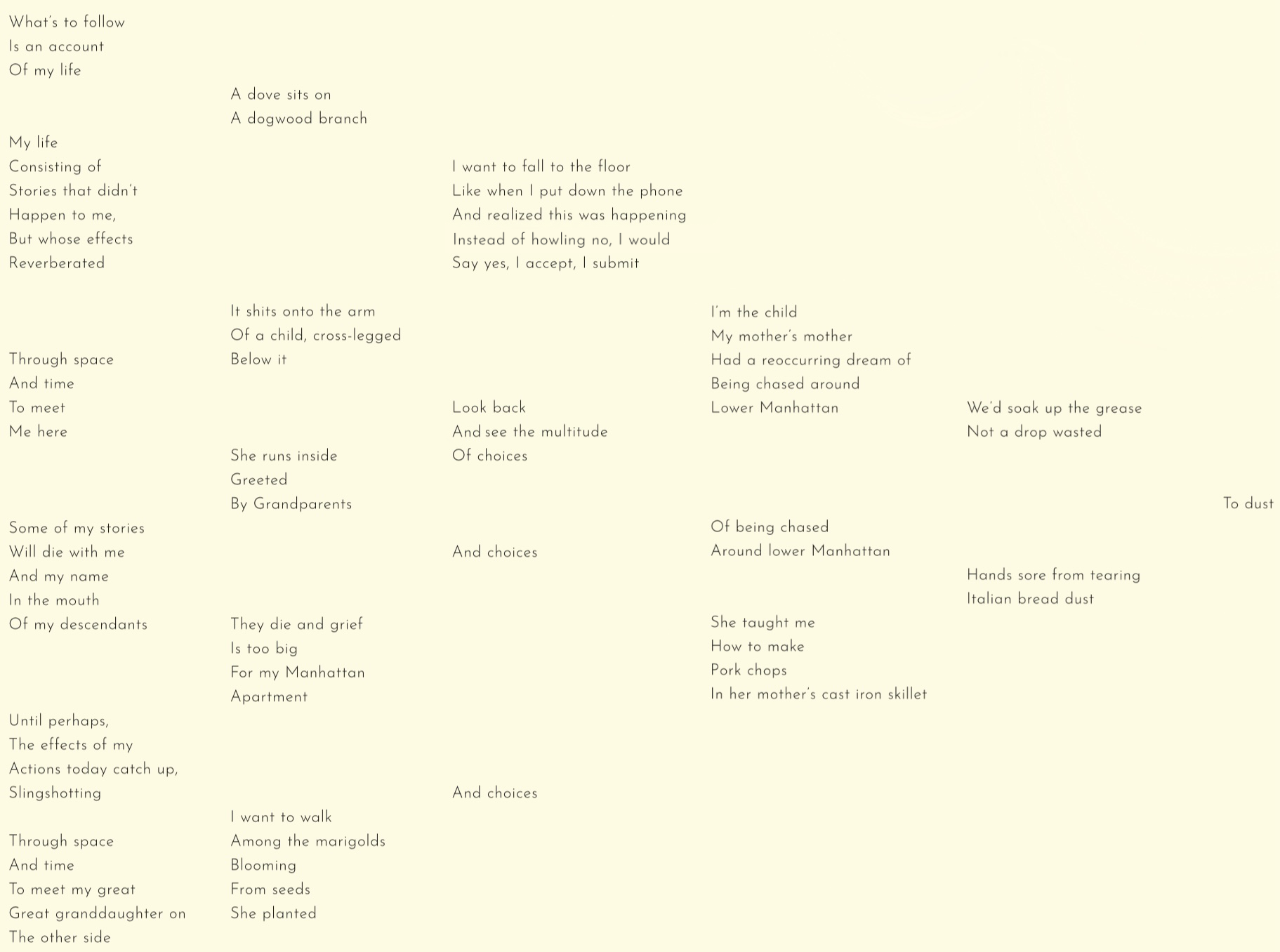
In her poetry, prose, and visual art, Sabrina Tenteromano investigates the entanglements of identity, familial legacy, and the human condition. Hybrid projects—exploring ideas of “enough”, and blood as both medium and prompt—are forthcoming in [your publisher name here]. She’s presented her research on sustainable community infrastructure for the National Science Foundation, and has been published in The Inquisitive Eater, Milk Press, and elsewhere. From 9-5, she leads communications for Civitella Ranieri, an artist residency in Italy. She was born and raised in the Lower Hudson Valley and now primarily lives in New York City, the home of her Italian emigrant ancestors.
sabrinatenteromano.art
@wabi___sabri
Sabrina Thompson
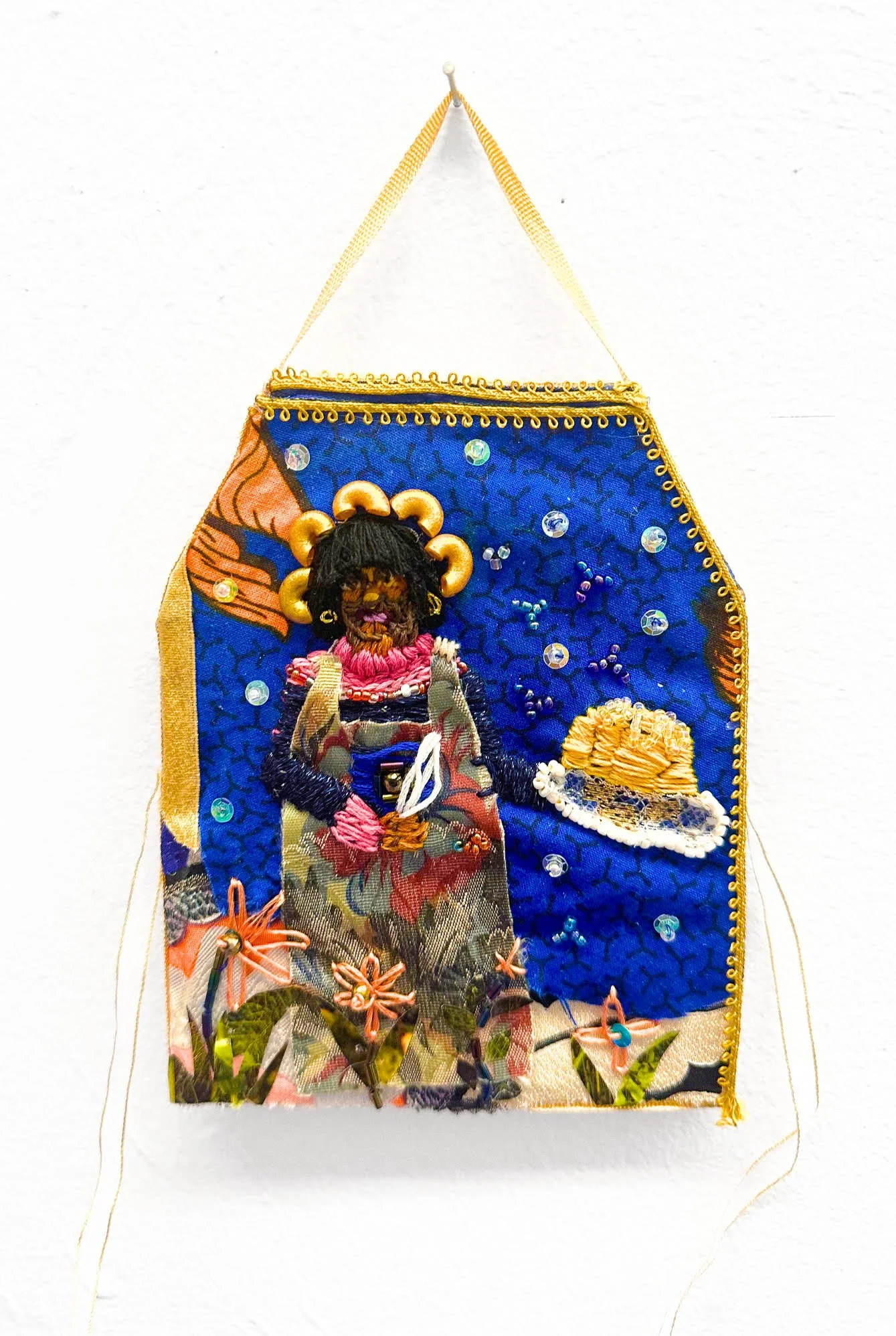
MACARONI QUEEN
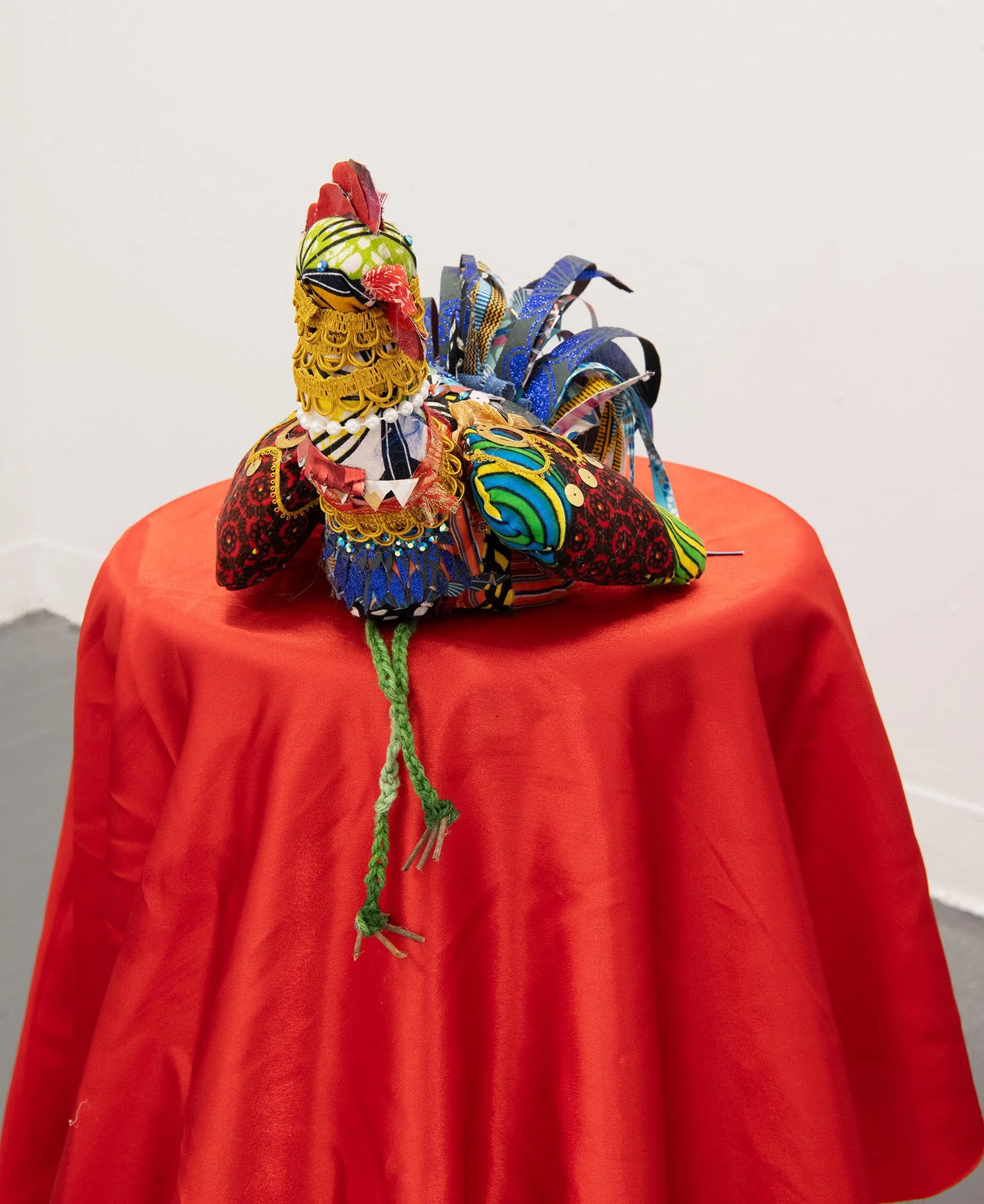
AIN’T NOBODY HERE BUT US CHICKENS
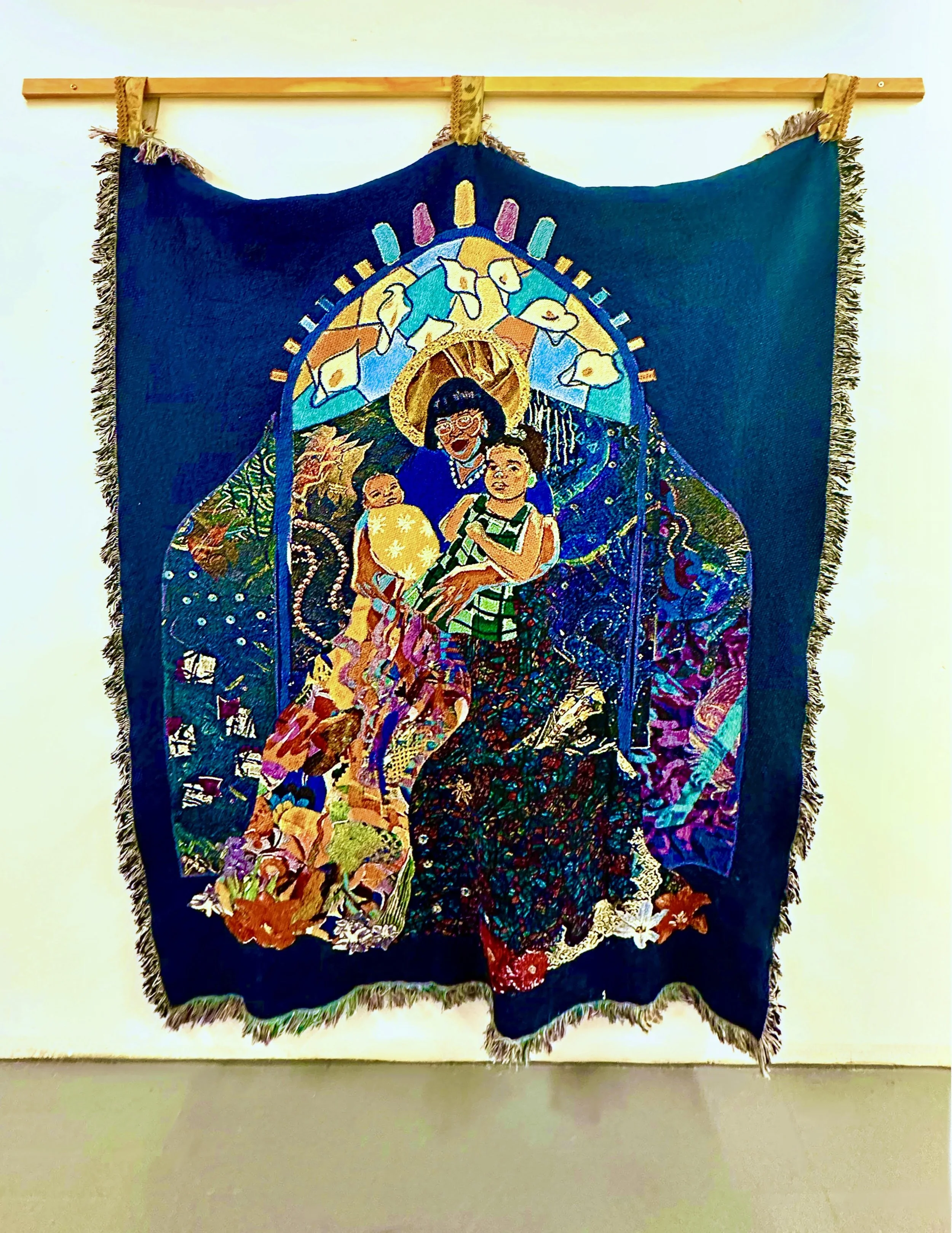
THE GRACE OF NAOMI
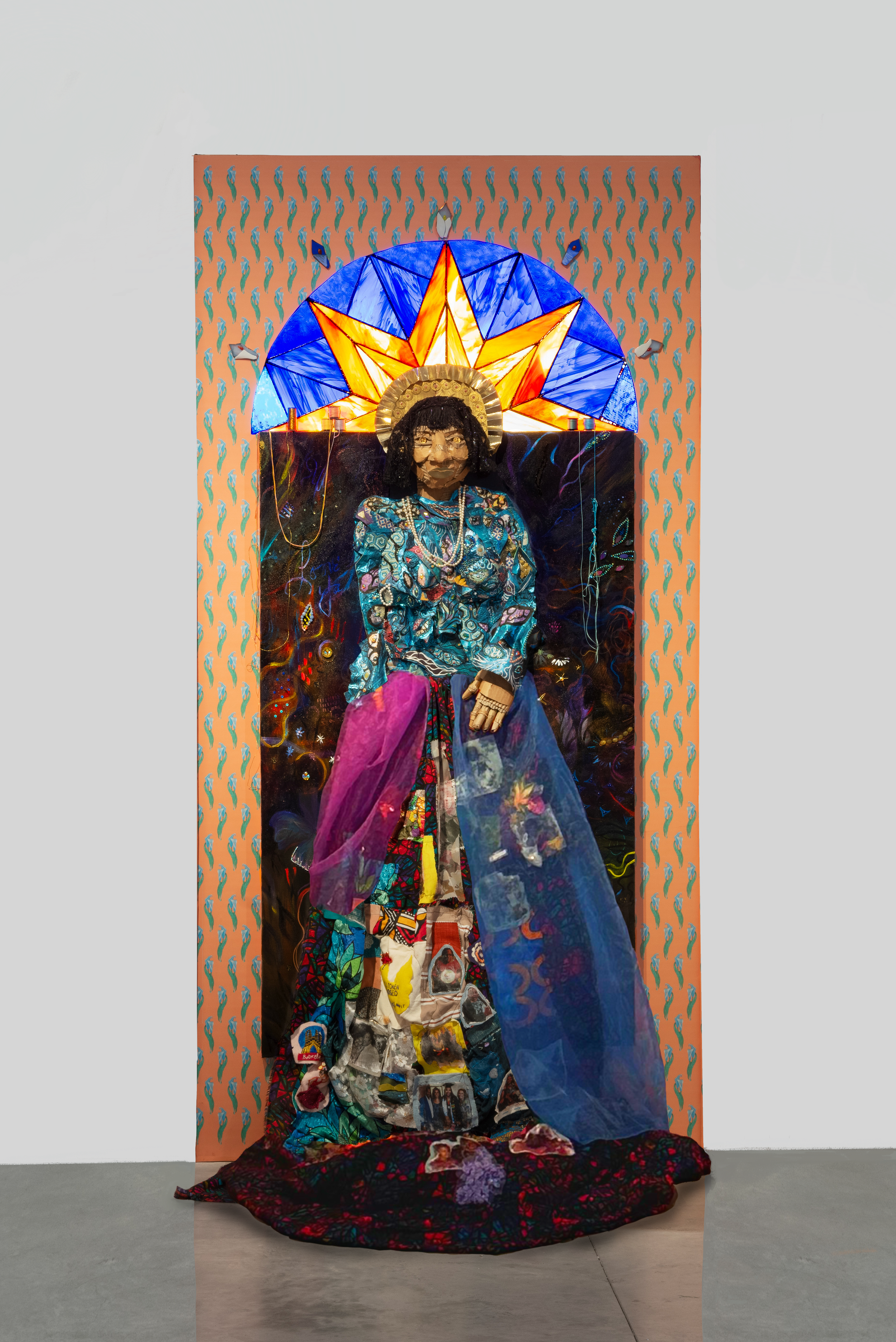
BECAUSE YOU LOVED ME
Sabrina Thompson is a self-taught interdisciplinary artist (b. 1996) whose work finds pockets of resilience, imagination, and Black Joy amidst a backdrop of generational trauma, heritable psychopathology, and the corrosive societal structures of power and control. Sabrina earned her BA in Psychology from the University of Michigan in 2019 and graduated from Parsons School of Design in 2024 with departmental honors, earning her MFA in Fine Arts with a minor in Transmedia and Digital Storytelling. Her work has been featured in the Eflux Education publication, the National Afro-American Museum & Cultural Center (Wilberforce, Ohio), the 25 E Gallery (New York, NY), the Anna-Maria and Stephen Kellen Gallery (New York, NY), Northville Art House (Northville, MI), Visible Art Grows Hearts (Sarasota, FL) and an international art fair called Telephone (phonebook.gallery). www.sabrinaelisethompson.com/multimedia
Instagram: @sabrina.e.thompson
Isabel Zacharias
CRAZING
It was crazy how the alibi was even more violent. I looked out the window and saw asterisks, quotation marks shifting on the wind, gathering in big sooty drifts. Lately I’m sorry for everything and the fascist advertisement just adds to a pile. More crazy, I mean, softening my brow to my employer. My sense of my function is not confusing; my function is to go. I learn how easy it is to go crazy. I learn craze was once used as a verb, meaning to shatter. It’s Robert Smithson’s A heap of language, only glass, and takes, and the bodies of children. Our inheritance of weaponry and trash. I have skills, I can handle this; validating ourselves releases oxytocin. I recognize myself for what I am: a passing phenomenon. My imperial witnessing is ossified. My sense of its function is not confusing; it coheres to a system of edges and points. The way I respond to a story when I have nothing left to say.
The point seemed to be to keep the desire by not noticing what might meet it: dusky pollen, long fade, a radio error, you seem jumpy, what did I want to say about summer. It needs things. I checked with a specialist about the shape of my foot. A bone’s forming over my bone: an ictus of need articulating: I cannot be un-disordered. We work on righting these core beliefs. A core belief about how I part my hair, disproven just so in photos that float to the surface from Daylife, which is now defunct, which was always hard to find. Nondescript but in a single formulation. Now someone is telephoning in: The better I get, the less I remember. What I believe about me is what I read in the paper trail. A core belief about what’s wrong. I packed everything, drove many miles away. There were Oreos and poisonous berries. It was summer, I remember now, it had always been summer. I told him everything. It’s natural, he says, to have pain.
MATTER WAVE
RUBIES
Snow fell on my engagement ring. It was the worst you’d seen me, palming the blacktop under cars. A man pulled a metal detector from a vertical stack and clutched a hip, rolling his desk chair my direction. Picked up a speaker-phone call from his wife who said just where the AAA batteries had always been stored: in the basement. We don’t need more. In the yawning mouth under the porch I beeped upon a bottle cap, an after-dinner mint, a sterling silver fountain pen I felt like keeping. It writes my thoughtless stretch across the months of losing. I am an act of watching, am a pinhole. I paste my phone number all over the south city after everyone has told me to forget it. My neighbor calls the next day and we meet in the park. He waves our hands away but his son says take the money. I see them both that twilight on the way to the trash cans and through the wildfire air I flash my rubies and he covers his heart. I don’t have to take the flyers down; I drive by where they were and see that someone did it for me.
Isabel Zacharias is a multi-genre writer and music person (playing, DJing, etc.) who splits time between the Twin Cities and Portland, Oregon. Her poetry and nonfiction explore the mind-body relationship, especially as it appears in mental illness and sexuality. She's had work published by the Academy of American Poets, Pom Pom Lit, NPR Music and others and is a Walter Nathan Fellow at the University of Minnesota’s Creative Writing MFA Program, where she received the James Wright Prize in Poetry. Her music project is called Babytooth.
Emily Zogbi
LESSER GODDESS
I’ve lived inside a lover’s boot. Your mother’s withering
glare. The fever of a half-starved dog.
I know where I crawled from. But you—
have you touched the face of primordia?
Of all my names the text prefers madness.
I disappeared
into metaphor, became
a drawing on an urn, what lives in the throat
before a scream. I’m the stinging color
rosy in your cheeks. I am what makes a flame
extinguish in the hand. I am familiar with flesh.
I suppose because you called me,
I came. Women claw loved ones into ribbon
tied around your neck for luck.
A girl slams a door in the wrong house.
A son is held in the vessel of his mother’s eyes
unrecognized as an animal
violent and ready for killing.
I have one clear purpose
to madden your daughters and make them drink
bent at the waist until they recall the meaning of worship.
You can gut a king
Same as any beast. A plastic doll
in the curious hands of children, crowned
with the head of a dog—beautiful transmutation,
it’s human to argue
a shade of blue. I have little patience for men
who peek behind the curtain and look too long.
An animal cannot outrun its own survival.
I’ve got him exactly where he should be
—howling, and on his knees.
We can find something for me to kill
on your behalf. You know
you need only lift a finger and point.
Emily Zogbi is a writer from Long Island and author of all the time more than anything(2023). Zogbi was the 2021 recipient of Palette Poetry's Sappho Prize, and earned her MFA in poetry from The New School. She lives in Queens.
BOOK REVIEW
Hazel Alexandra
The Trans Mythology of Roque Raquel Salas Rivera’s Algarabía
Suspended on waves of arrebato,
I turned toward the vast memory of loss
and knew it was time to forgive protecting
this pre-T, lightning-in-a-blackout body.
One of the two epigraphs of Roque Raquel Salas Rivera’s latest book, Algarabía, quotes queer activist Leslie Feinberg: “There was a terrible moment in my life where I realized / the books I was looking to read, I might have to write them.” Algarabía: The Song of Cenex, Natural Son of Isle of Alarbiyya must be the answer to Salas Rivera’s own longing, a work that wields the personal, political and magical to create a poem of queer mythology.
Published by Graywolf Press in 2025, the book is a trans epic poem of self-discovery and survival. Roque Raquel Salas Rivera expands the experience of transness beyond gender: in the troubled “citizenship” of colonized Puerto Rico, in language, in migration or forced relocation. The queer body is able to traverse borders and expand possibilities in a way that is fiercely antagonistic to the cis-hetero empire.
Across the epic’s five Cantos, our protagonist, Cenex, wanders his home island-planet of Algarabía to discover his true origins and continue his journey of transformation. The Spanish word algarabía comes from the word for Arabic, and originally denoted incomprehensible speech but now denotes hub bub, jubilation and a cacophony of voices overlapping. As a trans Puerto Rican poet and translator, Roque Raquel Salas Rivera saw this word as an expression of the trans experience but also the mixed and inventive dialects of Caribbean Spanish.
In the spirit of algarabía, the poems are told from a large and diverse chorus of characters, though primarily through the words of Cenex himself. Salas Rivera notes his love for epics, which are “weird objects” often riddled with tangents and transplanted language. Salas Rivera’s epic, however, queers theme and format, often playful, humorous, ironic and inventive. These poems vary in font, size, alignment, become images, turn upside down and inside out, yell at each other, and whisper secrets.
Algarabía is primarily an exploration of trans origins and self-narration. In Canto I, Salas Rivera recounts the Greek myth of Caenis, the nymph raped by Poseidon who asks to be transformed into the man Caenus. Cenex is told this is his origin, but he does not recognize Caenus as himself and asks the Muse to help guide “beyond official history” and create his own trans narrative outside of cis tellings. Along his journey, Cenex must confront a mysterious world filled with the everyday violence of bigots and “transvestigators” who continuously attempt to hijack and rewrite his tale.
Cenex’s story is also fundamentally linked to the conditions of occupation and empire. Algarabía, an almost-Puerto Rico located in a parallel universe, is colonized by Earth. Salas Rivera infuses Puerto Rican culture and spirit into this collection and explores the island’s precarious status as an American colony. The book opens with tourists crowding Algarabía’s beaches and displacing natives, emphasizing the feeling of dislocation and estrangement caused by occupation:
Even if the fighting ends, we can’t return.
The families that forgot us aren’t waiting,
and if, for whatever reason, we win,
our glory will march wearing its sorrow,
and we’ll wander among the wounded
as if we, ourselves were shot.
Our telling is a war unto itself.
from Cenex describes his origins, 7
Algarabía’s attitude towards the empire is hostile, constantly challenging and rebuking its domain. In a moment of revelation, Cenex discovers he is originally from a different Earth colony, yet rather than feel uprooted by the news, he embraces his history as yet another instance of transness: “To know I was from Xamsi, but I was of Algarabía. / What pride! I was trans in every way” (170). Cenex rejects a framework of victimhood for one of queerness; he is proud of his multiple origins even as they contain echoes of colonial violence. Salas Rivera closes the door on empire/patriarchy’s attempted invasion into the queer soul in this expression of trans pride.
As when a drink boyfriend knocks
and cries outside a locked door,
so too empire wishes it could enter
our hearts, and oh, how it tries!
Sometimes successfully, but most
often, we are hard in our softness,
and say, no thank you and fuck off!
from Heart Cemetery, 156
———
I spent much of the first Canto orienting myself to Salas Rivera’s singular style with its lists, creative use of fonts, and incorporation of Spanish. Rather than include a reader’s guide at the beginning, Salas Rivera writes in an endnote titled “A Note on Nomenclature and Style”:
“I didn’t want to offer any guidance or explanation for how Algarabía should be read that would do Cenex and his world a disservice. After all, it engages with misunderstandings just as much as it engages with identity formation and transformation.”
The opacity of both form and content is part of the world-building Salas Rivera sought to do in Algarabía, as trans colonial experience is nothing but clear, and as stated, misunderstandings constantly arise. Salas Rivera included both English and Spanish versions in the book, intending for them to be read side by side. Salas Rivera writes, “Cenex Algarabía does not exist to explain himself. The version in Spanish is its own thing. The version in English is its own thing. Together they, like the chorus, are sometimes harmonious, but most often clashing or indifferent…” Neither version is the original, rather they express Cenex’s tale through each language’s unique syntax and poetic instruments. Yet the Spanish language is as much a part of Cenex’s story as any plot point and therefore refuses to be translated or made foreign through italicization in the English version. Cenex’s story is not only a translation of a queer life, but an inter-language dialogue: “This canto and the rest, translation” (168).
One of the questions Algarabía asks is “When does transness begin? When does it end?” Canto V “Happy Birthday Cenex!” is the final chapter of this odyssey and yet also Cenex’s birthday, an ending and a beginning. After all, transition “is a neverending process,” a neverending becoming. After reaching the queer paradise of Simurgh, Cenex’s trans elders guide him through his first testosterone shot. At the moment of his injection, “a multiverse portal opens in the text”:
to think that a continuum might be quartered
by //verses. That in another //verse, another me,
in his bathroom, in a suburb named Villa Nevárez,
in a city called San Juan, in the colony-country of Puerto Rico,
under an empire self-titled The United States (informally declared America)
in this exact moment, was alone,
with a syringe in his hand
and a chorus in his head, facing
the mirror and imagining a life
ushered in by the union of
who I was and who I was
to become.
Salas Rivera brings together the voices, the doubts and confusion of the trans experience with the euphoria of transformation. Within the humor, the tragedy, and the chaos, Salas Rivera imbeds his deeply personal reflection:
When you see young Cenexes in this world,
going to their appointments, taking HRT
despite murders and fines,
they look shower fresh.
Had I intuited the odyssey of trans reiteration,
I would have placed an early chemical bet,
but I was to wander long before I understood
not just how to change, but how to choose.
From Late-stage transitions, 62
Telling Cenex’s story through the modality of myth reincorporates queerness into the history from which it has been wiped away, and situates a queer trans subject as an epic hero rather than a troubled side character or a cis nightmare-fantasy. Trans existence is not limited to the contemporary; it has its own longstanding mythology and poetics. After reading Salas Rivera’s new trans mythology, the readers join Cenex in experiencing “the sublime driving force of a fully trans world.”
Hazel Alexandra is a student of Linguistics and Literature based in so-called New York City. They love reading and writing on themes of uncanny encounters and complex relationships.
BOOK REVIEW
Ayling Zulema Dominguez
Now Streaming: In Service of Truth-Telling
Sofía Aguilar’s Streaming Service is the book that says what TV executives would never dare greenlight screenwriters to say. I read Aguilar’s book shortly after reading James Baldwin’s The Devil Finds Work, in which he writes about his encounters with Hollywood, sharing,
“I had never before seen this machinery at such close quarters, and I confess that I was both fascinated and challenged. … Each week, I would deliver two or three scenes, … as the weeks wore on, and my scenes were returned to me, ‘translated,’ it began to be despairingly clear (to me) that all meaning was being siphoned out of them. … How I got myself out of this fix doesn’t concern us here—I simply walked out, taking my original script with me—but the adventure remained very painfully in my mind, and, indeed, was to shed a certain light for me on the adventure occurring through the American looking-glass.”
I ground us in Baldwin’s words because as Aguilar herself notes, “I am in debt to the creativity of Black thinkers and writers … ,” referring specifically to the golden shovel poetic form, wherein each word of one line from another poem serves as the end word of each line for a newly constructed poem, as created by American poet and educator Terrence Hayes when he wrote “The Golden Shovel” (2010) after poet Gwendolyn Brooks’ “We Real Cool” (1959). What Baldwin shares feels relevant in reading Streaming Service, where golden shovels are uncompromising in their social commentary, in ways the TV shows from which lines of dialogue are plucked tend not to be. I can make sense of TV shows and films nearing the critical edge but not quite allowing their writing to arrive fully at the social critique, commentary, or analysis, because of what Namrata Poddar names as the dominant Euro-American writing pedagogy’s “emphasis on brevity, clarity,” citing her own most commonly received feedback in creative writing workshops: “show, show, show,” “show, don’t tell,” “get rid of exposition.”
Yet we come from cultures that speak sin pelos en la lengua; frank and direct against injustice and oppression, and what needs confrontation and change often requires the direct call-outs/call-ins. All to say, Aguilar’s collection of poems are unwavering in denouncing the ex who was never one for boycotts and still orders from Amazon, in praising the love who taught her how to get help without calling the cops, in leading a church service (if she were to attend church again) where names & pronouns are sacred, honorific, in disavowing the colonial myth of mestizaje, in calling genocide a genocide, rather than a war, conflict, or military operation, and in saying so much more that must be said now, decisively.
The entirely lowercase collection is no less fierce for it. The rigor and resoluteness behind each line reverberates deeply, as is the case in “i want to share an orange with you,” where the title draws you in sweetly, tenderly, softly, yet the opening line is anything but: “but if it were up to you, you’d eat the whole thing by yourself.” Aguilar continues to develop the world of the poem, the reality of our present, where our at-times seriousness and unminced words are a product of our conditions: “i want to split this orange in two if you are / a fan of mandarins & manmade GMOs too—easy to peel like a jacket with zippers. seedless. just / like that! what we did to the earth like dams, pools of chlorine & salt, or words / we turn into names. mandarin. clementine. tangerine. christmas orange. did you know they’re / both a color & the thing itself? that they’re best in winter? bitter but good on the tongue. this is meaningless / now when we get heat waves in december & shiver during mornings in april.”
Our conditions, of course, never being an excuse for quiet submission, as laid out in “mexican manic pixie dream girl,” where Aguilar writes, “ask me about borders. walls. i’ll show you how to cross & say no / in two languages without taking a breath. did you know my tía can bottle lightning / from a pepper plant? onions? ¡órale! let me swell your tongue today / by two sizes.” In the vein of resisting confinements, Streaming Service feels like a pertinent reminder that you can command the page as your story most demands, that the page works for you, and should you unshackle it from the upright, vertical 8.5x11” labor, so much is possible, as in “my gender is an unsolvable crossword,” “i want to be stuck in a time loop with you,” and every poem that makes you turn the book on its side, reminding readers of the horizon where the sun we recommit to each day, rises and sets.
In a recent workshop with Asa Drake, we were asked: “What are things you love to see in poems? What are the things, places and concepts that you love in your daily life?” I love poems that do not turn away from our collective sites and sources of grief and pain, but rather tell me honestly how they are dealing with it, what and how they are keeping their fight alive, much like in Aguilar’s “anniversary song”:
we fight for
what matters: a home, a want, a wish. it’s you. always you.
And may we never forget it. What matters is you, and me, and us. “& now look, we make the bed / together, hold each other, make space for us both in this room.” Where the room in Aguilar’s “positions” is actually unbounded, un-walled-in, open and abundant, awaiting our entrance and preparing the groundwork for a weaving of our voices together.
Ayling Zulema Dominguez is a poet, educator, and culture worker who dreams and writes toward a borderless world with rematriated lands. Their writing asks us to defy colonialism and nurture collective care and kinship in its place; it asks us who we are at our most free, and explores the subversions needed in order to arrive there. What can language do for our resistance efforts? How can we use it to confront past and present harms, and wonder in ways that will help cultivate new worlds? As Nahua & Dominican diaspora, they root their storytelling in the knowledge of the cerros and the assertions of the ocean and its daughter: water memory. Ultimately, Ayling believes in poetry as dutiful imagination and liberation practice. Ayling has been an Artist Development and Teaching Assistant Fellow with The Center for Imagination in the Borderlands, a Kathryn Blair Swarthout Fellow, Lower Manhattan Cultural Council Artist in Residence, Laundromat Project Create Change Fellow, Lisa Brannan Prize Finalist, Yellowwood Poetry Prize Finalist, and a The Bronx Recognizes Its Own (BRIO) Awardee, among other honors. Select poems of theirs have been published in The Poetry Project, Yalobusha Review, The Seventh Wave, The Texas Review, Huizache, Alebrijes Review, and Beyond Borders Literary Review. Ayling is committed to nurturing communal creativity, and continues teaching art and writing workshops for community, and hyping up poets and artists at local open mics, between Rananchqua (Bronx, NY) and Akimel O'odham lands (Arizona).