
HOW TO POET

PSNY's Places to Write #6
As much as there’s plentiful opportunity to be inspired in darling NYC, often quiet times to write are harder to come by. We’re launching this series on First Mondays as a monthly reminder to take some time out for the poet in you. Carve out some you-time and head down to this month’s PTW spot & give this Prompt a free write.
This recently opened Brooklyn gem is named after the owner’s book-loving grandmother, Elizabeth. It boasts over 4,000 titles and a high quality selection of beverages, that can take from your morning coffee to an afternoon IPA or an evening glass of wine. It’s only closed Mondays and is open 10am-10pm every night except Tues-Wed. It’s a beautiful and calm environment focused on connection and creativity.
Directions:
Navigate to Carroll St subway stop off the G (if it’s running) or F train & walk 2 minutes to 315 Smith Street.
Writing Prompt:
Choose five titles from five different bookshelves/sections. For example, Romance, Crime, Fantasy, Poetry and Philosophy. Take those five titles, for example: Kindred, Happiness Falls, Red at the Bone, Table for Two and Northern Light. Aim to include each of these five phrases in one singular poem, seeing where the words take you alongside a beverage from the bar.
Hashtag #PSNYPlacestoWrite when you visit our PTW Location 6.
Share what you write with us @poetrysocietyny on Instagram or TikTok so we can repost it!
Series by F.M Papaz
F.M Papaz is a Greek-Australian creative and writer who believes that there is space at the literary table for everyone and is excitedly setting up your cutlery. Her poems have appeared or are forthcoming in Wild Roof Journal, Five South & Mantissa Poetry Review amongst others. She does Editorial work for Milk Press and Tabula Rasa Review as well as being a Marketing Associate for PSNY. Connect @fmpapaz on Instagram & TikTok and visit fmpapaz.com/ings to find her monthly newsletter about living a creative life and to find her chapbook, ‘Distance Makes the Heart Grow.’

Poems for June 2024's Trending Searches
Bringing home a new pet poet can be a scary experience. You’ve brought your new companion home - how can you keep your pet poet happy and healthy?
Humans across the globe search the internet for the same things year after year— YouTube, Facebook, the weather forecast. Yet there are also things we search for only in the heat of a collective moment, such as the Blue/White dress or SpaceEx. In these ways, the internet offers objects both enduring and ephemeral.
Below is a selection of five trending search topics from June 2024 according to Google Trends and Exploding Topics, each accompanied by a relevant poem. Maybe you were looking for these.

1. Weather
Last weekend was humid in the Northeast and I read a poem called “He Watches the Weather Channel” by Charrie Shipers. Aren’t weather forecasts a sort of divination? Even when tech and satellites get involved, it’s still a prophecy, and one we each care about for some reason or another (or another, or more). We all want to know what happens next.
Read “He Watches the Weather Channel” by Carrie Shipers

2. Translate
Я говорю по-русски, et j'apprends le français. I once showed my son a
Russian-English dictionary and he said, “Oh, it’s just like google before they had the internet.” Why search books for words anymore when you can search the web? That’s why we’re here. Some still carry mini-dictionaries in their pockets, but many have been replaced by smartphones. Some carry lived experiences inside complex neural networks that navigate between tongues. Whatever your method, it’s useful to have a few languages attached to your person in some way.
Read “Bilingual/Bilingüe” by Rhina P. Espaillat

3. USA
In our global society, folks from all over hold a vested interest in the USA. The poet Mosab Abu Toha recently made a plea on Instagram for non-Americans to vote in U.S. presidential elections, “simply because a United States President is not, unfortunately, responsible for his people but for the people in the whole world.” The USA— it’s a confusing concept and I might need to google it, too. In “notes on the seasons,” Roque Raquel Salas Rivera explores the concept of national identity while also reviving our need to translate between languages. The poem in English never mentions the USA, but the Spanish version mentions usa, which translates to uses.
Read “notes on the seasons” by Roque Raquel Salas Rivera

4. Indiana
No doubt people in the U.S. have been googling Indiana with regard to Caitlin Clark, #SPORTS. But I knew that Indiana would be poetic. My great uncle lived there and his yard was full of bowling balls— full. Bowling balls of all colors and sizes. Bowling balls in bird baths, on stone walls, and in the garden. It may also be the first place I ever saw an osage orange, which looks like a tennis ball crossed with a brain. Yes, you could write a poem or two in Indiana. And Lindsey D. Alexander did.
Read “Sleepless in Indiana, I Contemplate the Age-Old Arts” by Lindsey D.
Alexander

5. Trump
Fatimah Asghar introduces her poem, “When the Orders Came,” with a quote rom former president Donald Trump’s administrative team: “[We are] calling for a total and complete shutdown of Muslims entering the United States.” Fatimah’s poem is profound and haunting in the way that only poetry can be, in the way that it bends tragedy and horror into a platform for compassion, healing, and change.
Read “When the Orders Came” by Fatima Asghar
I suppose we search the internet for whatever we’re curious about, and whatever
we’re curious about could probably become a poem. Maybe it already has.
Written by Allisonn Church
Writer Bio: Allisonn Church was born in a small rural community to a mother who pinned butterflies in glass cases and hid scarab beetles in her jewelry box. Her first favorite poem was “The Willow Fairy”’ by Cicely Mary Barker. Find a list of Allisonn's published work at churchpoems.wordpress.com.
Through a Poet's Lens: The Unseen Connection Between Coffee Brews and Poetic Verses
What do coffee and poetry have in common?
At first glance, they might seem like unrelated pleasures—one a daily necessity, the other a sublime art form. Yet, for many writers, myself included, coffee is more than just an ancient beverage. It is an essential part of the creative ritual, a companion to the process of putting thoughts and emotions into words.
Like most poets, I adhere to a ritual that borders on the sacred. Whether this ritual benefits or harms us is a matter of debate, contingent on the time, energy, and mental space it consumes under the guise of “productivity.” Yet, if I may indulge for a moment, I propose that these rituals are as vital and as inevitable as the feelings they help us navigate.
Feelings can be elusive and difficult to process immediately, but they can certainly be articulated and named, even as they evolve. This is the essence of poetry: a word set into a line, forming a stanza, flowing into another line, until our innermost thoughts are laid bare. Similarly, coffee serves as my ritual when crafting poetry, even poetry that revels in “all things caffeine.”
This isn't to suggest that those who abstain from this simple ritual, enjoyed by over half our population daily, are at a disadvantage. Rather, it is to suggest that this ritual is available to you, should you choose to sip on it.
Coffee is ubiquitous: every block in a metropolitan area, every turnpike in suburbia, offers a reminder that there’s a coffee shop waiting to serve you on your journey—even if you don’t know the destination. It is inescapable, like poetry. The moment an emotion stirs within, you are compelled to act. Yes, you could sip on it for immediate gratification, but you could also let it drip, simmer, and remain unindulged.
Why should poetry be any different? Who says poetry must always be written? Sometimes, poetry is found in the words left unspoken, captured within our mugs, “like the mugs we hold a little too close.”
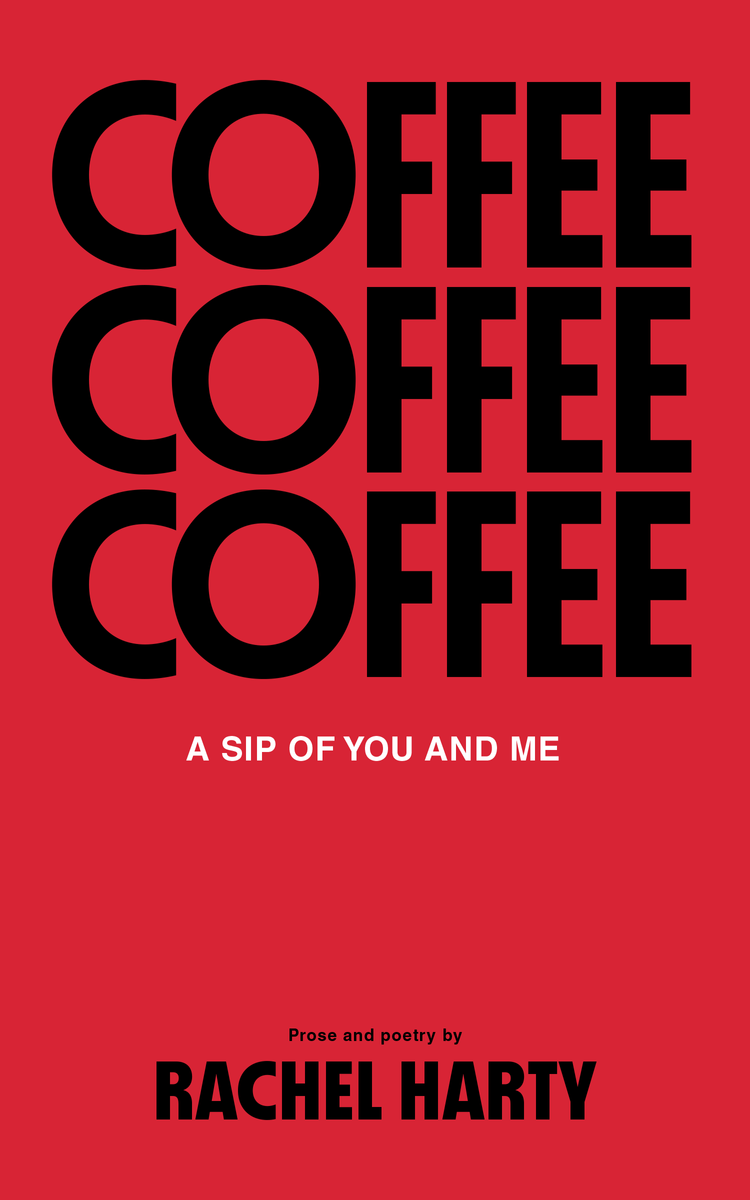
In my debut poetry collection, "Coffee, a Sip of You and Me," I seek to capture my upbringing, my love life—including its not-so-sweet moments—the expansive world I grapple with, and the happiness I brew from the lessons I’ve encountered and learned from along the way.
To give you a glimpse into this symbiotic relationship, this ritual of coffee and poetry, this connection, that I return to time and again, consider these verses. Remember, whether reading or writing these poems, there are no rules—just hands on a keyboard, fingers flipping pages, and pen to paper, to spill the beans:
you order black because you’re certain
you taste black because you’re saddened
you stopped sugar in your coffee because you’re not satisfied
you stopped sugar in your coffee because you let them take
your sweetness
you burned your tongue because you couldn’t bear to speak
you didn’t think they’d understand anyway
you blistered your taste buds to feel alive
you did not wait for the coffee to cool
because what difference did it make
you weren’t in charge of the order anyway
—DEPRESSED
in due time
the remnants of you and i will vanish
and i will find another drink
that’s not quite you
and it won’t quite be the time
and certainly, i’m not fine
but quite honestly, i’ll tell myself lies
and tell the crowd: this is the best drink i’ve ever laid eyes on
and best of all
i won’t hope for your return
because drinks have an expiry date too
—ONE AND DONE
i like my friends
my mochas
my blondes
my dark roasts
my blends
for we all love
and converse
for we vow
we won’t
we don’t
discriminate
–21st CENTURY KID
Written by Rachel Harty
Writer Bio: As a transplant New Yorker, coffee aficionado, and poet, Rachel Harty can often be found roaming the city on gliding, hyper-caffeinated feet. And if you can't find her in person, well, discover her debut poetry collection, Coffee, a Sip of You and Me, now available on Amazon and select independent retailers.
To discuss her latest book or respond to this article, visit her at www.RachelHarty.com.

Gaining Stamina for Syntax: How Punctuation Changes Everything
Gregory Gonzalez writes: “When it comes to being a poet, gaining stamina for syntax––the sentence structure and punctuation of prose––is important. Sentence structure helps create brevity in poetry, and brevity then goes on to control how often one takes a breath within the sentence; further amplifying the tone, and the mood of the poem.”
When it comes to being a poet, gaining stamina for syntax––the sentence structure and punctuation of prose––is important. Sentence structure helps create brevity in poetry, and brevity then goes on to control how often one takes a breath within the sentence; further amplifying the tone, and the mood of the poem. It is why run-on sentences mimic drowning, and why single-word sentences represent panic attacks. It. Is. What. Helps. To. Create. Chaos. And. Forces. The. Reader. To. Pause. With. Every. Word, mimicking the idea of losing oxygen…just to create tension for the reader.
Consider this:
Standing in an open field of red chrysanthemums, I am completely surrounded by a horde of buzzing hummingbirds: who are willing to go through me just so they can reach their sweet nectar.
Versus
Red flowers call dancing hummingbirds,
Swaying winds control beating wings,
Frenzying around singular posts.
While both are a style of prose, there is a whole mood shift between the examples. Despite what is read first: either the sentence, or the stanza; each verb phrase, and each noun phrase, within the poem creates its own backstory, its own tension, and its own brevity, which then forces the reader to either take a deep breath––preparing for the long sentences that are ahead of them––or a small, concise breath to get through the lines of a stanza.
A Simple Switch Changes Everything:
Another great example of syntax in poetry is Howl, by Allen Ginsberg.
Take the first line:
I saw the best minds of my generation destroyed by madness, starving hysterical naked.
The first thing one should look at are the phrases. If the verb phrase had been set in front of the noun phrase, the line would read how the subject of the sentence ‘I’ is the one who is starving, hysterical, naked, rather than the object of the sentence ‘the best minds of my generation,’ being the ones who are starving, hysterical, naked. By leaving the comma in place, but re-arranging the noun phrase and verb phrases…the mood of the poem shifts…and, as a result, places the subject inside of the madness. Whereas currently––and in perfect form––the subject is excluded from the madness and is, instead, an outsider who is looking in and analyzing the object.
Also, one should take note: by omitting the oxford commas (or, the serial commas) in the verb phrase, where the three words are being listed for specific purpose––even though they are not in alphabetical order––it leaves a certain kind of un-easiness the narrator is striving to achieve, because it breaks all the conventional rules for grammar and structure. While all three of the words are adjectives, they’re being used as qualifiers for the object, which means they should…by rules of grammar and structure…they should have commas to separate their qualities.
It's why mastering syntax is so important for being a poet, regardless of the said person being an aspiring artist or someone who is already established within the community. Syntax not only helps create both mood and tone in the poem by using brevity, but it also helps create clarity and direction in the given work. Whereas the rest of it: the allusions, the cesuras, the diction choices, the different moods, and motifs, and metaphors, and punctuations, and themes, and tones; that will all comes later. For the more a writer can play with syntax, the more they look for inspiration. And the more they look for inspiration for their work, the more they will learn about their surrounding world and everything in it.
Written by Gregory Gonzalez
Writer Bio: Gregory Gonzalez graduated from Sierra Nevada University, where he earned both a BFA and an MFA in Creative Writing. He's studied under and many other wonderful artists, and his works can be seen in the San Joaquin Review Online, Hive Avenue: A Literary Journal, the Dillydoun Review, Wingless Dreamer Publishing, Bridge Eight: Film & TV, Drunk Monkeys: Literature and Film, Causeway Literature, Nat 1 LLC, Vermilion Literature, Writing Workshops, and Havik Literary Journal.

Your #NYCPOFEST24 Guide
Everything you need to know about The 13th Annual New York City Poetry Festival on Governors Island, July 13th and 14th. This covers: Transportation, Ticketing, Readers and the many sundried features of the Festival.
We thought we’d put together a special edition of How to Poet to ensure you get the most out of EVERYTHING The New York City Poetry Festival has to offer, which is A BUNCH.
Let’s start with transportation & navigational tools that will help you get smoothly from place to place.
Transportation:
The Governors Island Ferry leaves from 10 South Street in Manhattan every 30 minutes.
The Festival begins at 11:00am so we suggest taking the 10:00am or 10:30am Ferry.
The NYC Ferry also leaves from several Brooklyn stops at a less frequent cadence.
MAPS
We have a beautiful artistic site map illustrated by the amazing @MarthaMay.
If you want something more interactive, we have a Google Maps link that will calibrate you specifically to every Stage, Vendor, Restroom, etc.

TICKETING
The New York City Poetry Festival is completely free for anyone to attend.
You can register for your free ticket on Eventbrite!
If you would like to include a donation you do so also. Or consider upgrading to a VIP ticket to hang out in our VIP Villa with headliners, PSNY members, sponsors & enjoy free drinks and good all day for $55.20 for the weekend. Select that ticket option at this link also.
ITINERARY
Poetry IS the attraction of this Festival & boy do we have an abundance of talented poets to choose from.
Our Headliners are performing between 3-4pm at The Brinkley stage each day of the Festival: the amazing poets Ilya Kaminsky, Kazim Ali, Katie Farris, and Safia Elhillo !
Outside of this hour of power, our interactive Reading Schedule is on the Festival website, where you can learn about each organization and the readers they are featuring.

BONUS FUN
You didn’t that was all did you?!
You don’t want to miss these other Festival features:
> The Ring of Daises Open Mic Stage where you can sign up & perform
> The Youth Poetry Festival, with a schedule of its own
> Our illustrious Poetry Brothel, performing four times daily
> A TREASURE HUNT sponsored by PlayTours,
(with a physical Poetry Passport available for pickup at the Members Table)
> Our first Festival Beer Garden!
> A packed Vendor Village, with a range of incredible NYC businesses to support
> Art activations for you to enjoy from a Poetry-Camp-themed Board Game Cafe to Postcard Writing and a solar-powered Merry-Go-Round.

Any other Questions? Comment them below on this post!
SEE YOU THERE!
Book Review of Geometry of the Restless Herd by Sophie Cabot Black
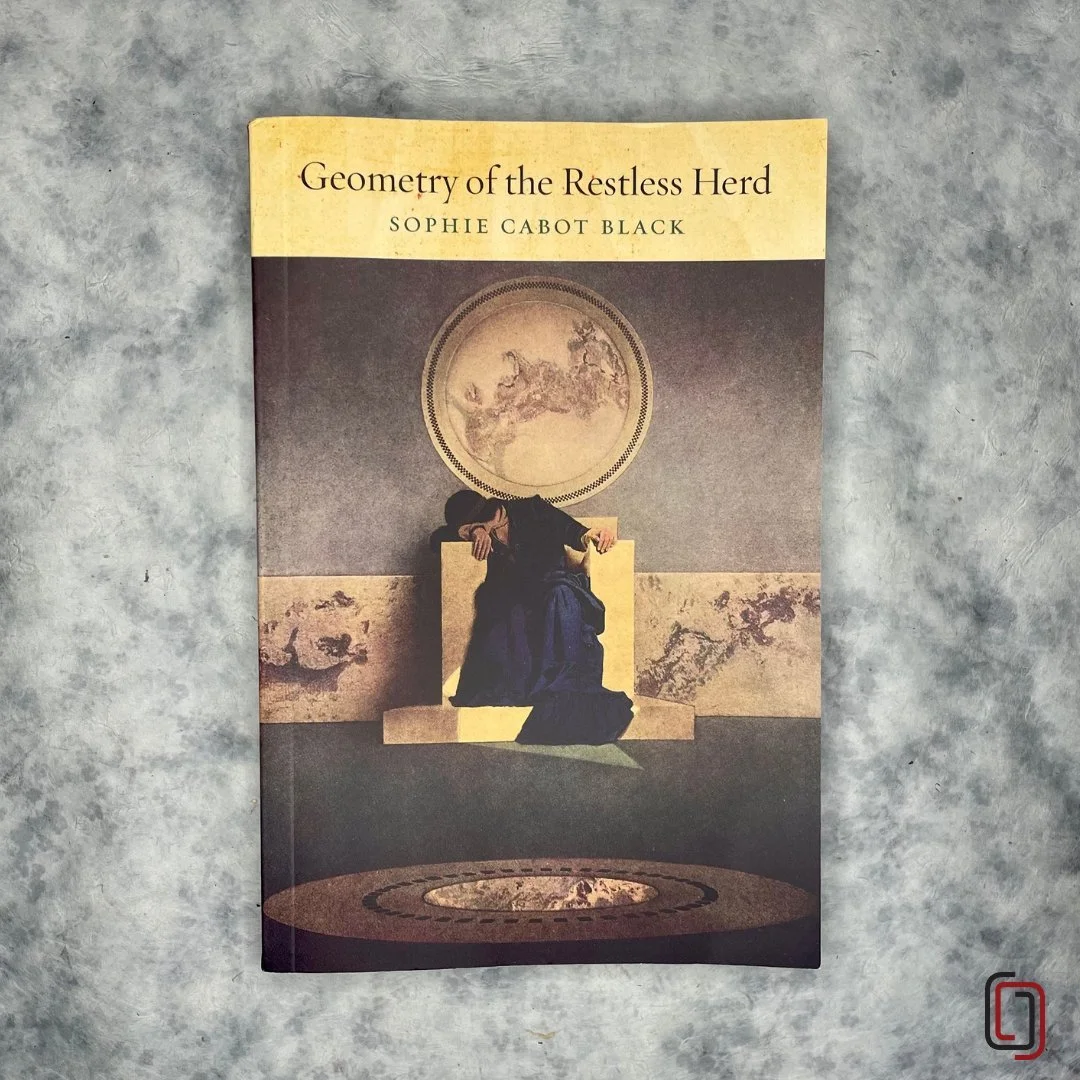
Sophie Cabot Black is one of our readers at the New York City Poetry Festival this year. Catch her reading at 5:30pm with Copper Canyon Press on July 14th at the Brinkley Stage. Read on for a review of her latest poetry collection.
I did not have one specific idea of what to expect when I delved into Sophie Cabot Black’s new book of poems, Geometry of the Restless Herd, but I must say I was not expecting a book of pastoral poems centered around sheep herding to be so scathing, fiery, and politically eloquent.
Every poem in this collection unfolds upwards from a strong and direct foundation of candid truth and observation into a soaring call to examine oneself, one’s surroundings, and one’s daily endeavors. Cabot Black weaves threads of connection between the layered, convoluted systems that make up our everyday contemporary reality, and measures how deep they go in an exploration of human relationships with work, nature, animals, and each other.
The first section of the collection starts off with “And So,” an ode to wildness about running off “Beyond and into our own summer” and leaving behind one’s home. This first section is preceded by the standalone poem “Coyotes,” addressing “the in between/ of where it was/ and where it might/have been,” a question which comes up throughout the collection.
In the poems which immediately follow these two, Cabot Black delves into a comparison of agriculture–specifically sheep herding, human-animal relationships, and human-land relationships–to contemporary post-industrial capitalism.
Poems like “Democracy Until,” “To Burn Through Where You are Not Yet,” and “Sanctuary” address the illusory nature of individualism, ownership, and freedom, particularly how systems of power determine and assign value to people and animals based on what service they can provide or how much work they can do, to the detriment of everything but profit. Herds of sheep being taken to a pasture which they don’t realize is confined from the world outside loom in similarity to people being funneled through cities, buildings, paperwork, and systems. The following section from “Democracy Until” particularly struck me:
My barn, your barn; we were never ready
To know the herd. Each coming from somewhere else
Fills in until whatever might be missing
Does not easily fit. And so the field
Becomes the shape the market requires,
And to set fire just before heading on
Is also to say it does not matter
Which part is played
But that it gets played… (Cabot Black 8).
Throughout the collection, Cabot Black explores what it means to play a part, especially as a worker. “To Burn Through Where You are not Yet,” “Silo,” “Bringing in the Stray,” “Handbook of Risk,” and “Of Use,” among others, highlight the mournful futility at the end of a day, or lifetime, of work for someone else. The speakers in several poems are distinct characters who have their own perspectives on and approaches to work, and include what I read as multiple herders both narrating and being addressed, foremen, agents, borrowers, and children.
The pastoral landscape that Cabot Black paints is at times desolate, lonely, and harsh, and the recurring speaker repeatedly voices regrets about the dreams and freedoms they have sacrificed in the name of work for someone else’s profit as well as marriage in a few poems. However, a strong hopeful and sweet note comes through simultaneously, in the cyclicality of nature and the creatures who inhabit the world of the poetry.
As Cabot Black questions the meaning of ownership over land and the meaning of being part of a family and a community when people are pitted against each other for profit, she simultaneously depicts the sweetness, intimacy, and stillness of being with others, whether human or animal. A strong connection and indebtedness to the land shines up out of these poems as an answer towards the question of meaning and strength. Connection, community, and storytelling are the tools of remembrance and resistance at play in these poems, and at our disposal as Cabot Black emphatically reminds us.
Written by Lily Naifeh-Bajorek
Writer Bio: Lily Naifeh-Bajorek is a multidisciplinary writer, musician, and artist studying in the creative writing program at Oberlin College. Currently, she is interning at The Poetry Society of New York, where she is helping plan and put on the 13th Annual New York City Poetry Festival and working on the Summer 2024 edition of Milk Press. In her free time she makes zines and puts on shows to celebrate her friends’ music and art. She hopes to publish several books, release a million albums, and open a venue/art and poetry space someday. Follow her on Instagram @trashprincessdestroy

#PoFest 2024 Headliners: PSNY's Poetry Picks
This post features poems from each of the Headliners of the 13th Annual New York City Poetry Festival: Ilya Kaminsky, Safia Elhillo, Kazim Ali & Katie Farris.
The biggest event in our calendar year (and yours too, if you know what’s good for you) is coming up this July 13th & 14th on Governor’s Island in NYC.
In case you’ve been living under an excitement-obstructing rock, the event I’m referring to is…
THE 13TH ANNUAL
NEW YORK CITY POETRY FESTIVAL.
Every day of the festival, between 3-4pm on the main stage, our incredible headliners will be performing. For a sneak peek into the poetry of Safia Elhillo, Ilya Kaminsky, Kazim Ali & Katie Farris see our PSNY Picks from their outstanding catalogues below.

spring
After Louise Glück
it’s late now, it’s early, no way
to know which season it is
of the total years of my life,
weren’t we only just nineteen,
tonya & i, wasn’t she only just
alive, long-limbed & cross-legged
on my dorm room floor,
wasn’t it springtime of a year
so unlike this one, thirteen
years past, cool nights in line
outside the nuyorican hoping
to make it on the list, wasn’t it
a friday night like this one
& the only people i wanted to love
were poets, earrings swaying
against their necks, dancing
in the dark of the room where we
all knew each other’s secrets, weren’t
we all just at that party, wasn’t i only
just eighteen, pointed northward
on a chinatown bus to that city,
to watch ai elo onstage at the apollo,
wasn’t she only just alive, smoking
with camonghne, asking me my favorite
song, cackling on the apartment floor,
on the air mattress we used as a couch,
how is it that it was long ago, how is it
i am on the other side of it, long ago, how
did i leave that city, that time when we
were all together, everyone alive,
wasn’t the dream to be a poet, wasn’t
the plan to live forever, our powers
newly acquired, newly in love
with what we could do, didn’t we all
belong to each other, to that work,
going after to the pizza shop
to recite what we’d memorized,
weren’t we all just there, wasn’t it warm
outside, wasn’t the road long & clear,
isn’t it early still, isn’t it late, & why
am i still here, did i survive or was i left
behind, & what season is it that we are
no longer together & some of us have gone?
Bonus poem: Click here to read Ode to Sudanese Americans

Lullaby
Little daughter
rainwater
snow and branches protect you
whitewashed walls
and neighbors’ hands all
Child of my Aprils
little earth of
six pounds
my white hair
keeps your sleep lit
Bonus poem: Click here to read We Lived Happily During the War

Ramadan
You wanted to be so hungry, you would break into branches,
and have to choose between the starving month’s
nineteenth, twenty-first, and twenty-third evenings.
The liturgy begins to echo itself and why does it matter?
If the ground-water is too scarce one can stretch nets
into the air and harvest the fog.
Hunger opens you to illiteracy,
thirst makes clear the starving pattern,
the thick night is so quiet, the spinning spider pauses,
the angel stops whispering for a moment—
The secret night could already be over,
you will have to listen very carefully—
You are never going to know which night’s mouth is sacredly reciting
and which night’s recitation is secretly mere wind—
Bonus poem: Click here to read Autobiography

Why Write Poetry in a Burning World
To train myself to find, in the midst of hell
what isn’t hell.
The body, bald, cancerous, but still
beautiful enough to
imagine living the body
washing the body
replacing a loose front
porch step the body chewing
what it takes to keep a body
going –
This scene has a tune
a language I can read a door
I cannot close I stand
within its wedge
a shield.
Why write love poetry in a burning world?
To train myself, in the midst of a burning world
to offer poems of love to a burning world.
Bonus Poem: Click here to read After the Mastectomy

How to Care for Your Poet
Bringing home a new pet poet can be a scary experience. You’ve brought your new companion home - how can you keep your pet poet happy and healthy?
See enclosed your Complete Pet Poet Care Guide
Bringing home a new pet poet can be a scary experience. You’ve brought your new companion home - how can you keep your pet poet happy and healthy?

Nutrition & Health
Some new poet owners make the mistake of feeding their poet too many treats. They argue that their poet enjoys them so much, and that if their poet eats it, it must be safe for them. This is not the case. Please limit their intake of ‘people food’ to avoid nutritional imbalances. Poets require a carefully balanced diet, served in reasonable proportions, preferably with a runcible spoon. Remember that poets need a higher than usual intake of tea, calico pie, and no end of Stilton cheese.

Socialization
Many poet owners are surprised to find that poets do not always get along well with others. At the local park or in a cafe, you may find it embarrassing when your poet behaves inappropriately with others, or worse, refuses to interact with anyone at all. Remember, poets can only learn through experience. Time spent in the company of others can help your poet rhetorically flourish. Be sure to quickly correct inappropriate behaviors by distracting and redirecting them with a favorite topic, such as whether Plath is over or underrated. Behaviors that need correcting may include staring for uncomfortable periods, discussing oneself in the third person, unexpectedly bursting into laughter or extended bouts of personification.

Grooming
Although it may seem superficial and vain, it is worth putting some time and care into your poet’s appearance. Although poets are typically indoor creatures and therefore do not attract the dirt of some other creatures, they can benefit from grooming. Trimming their hair is particularly important, as it can quickly become unruly and impede their vision. When venturing outdoors, poets require jackets with sufficient pocketage for notebooks and pens. Whether velvet, patched or leather, a quick brush once a week can keep their coat glossy and presentable. Do be sure to empty their pockets regularly, as they can snag all manner of detritus in their long coats - seashells, butterfly wings, cabbages and kings to name but a few.

Playtime
Believe it or not, some poet owners forget the importance of playtime for their poet. This is a shame, as it is one of the great joys of poet ownership! A few minutes of pun-o-war, Scrabble or the lazy but effective game of ‘mute the tv and let them narrate’ can keep them frisky and expressive for days. Remember, an under stimulated poet can resort to unproductive coping strategies such as writing entirely in white space or collecting vintage typewriters. These poor habits can be readily avoided with a few daily minutes of wordplay.
Conclusion
Whatever your breed of poet - rhyming, lyrical or beat - they can thrive with the correct care. Treat your poet well and you may even earn that highest of honors - a dedication in their eventual publication!
Written by Aloma Davis
Writer Bio: Aloma Davis is an emerging poet. Despite her best efforts, birds fly in and out of her poems. In 2022, she was a national finalist in the Australia Poetry Slam; in 2023, one of her poems was in the International Human Rights Art Festival in New York; and she received a Red Room Poetry Fellowship in 2024. She divides her time between living in Melbourne, Australia, and living in her head, where she has a library with one of those sliding ladders, Haast's eagle as a pet, and work-life balance.

Book Review: Copper Canyon Press Releases Nikki Wallschlaeger’s Fourth Collection, Hold Your Own
Hold Your Own wastes no time. From the imperative affirmation of its title, to the George Carlin epigraph and the opening poem How to Write a War Poem, Wallschlaeger outlines the state of affairs. It’s one in which feelings of helplessness, fury and desperation are as homeostatic as war, racial inequality and violent sexism. She’s clear, these “forces of evil” are fixtures in our world. But, the potent assertion being made is, so are we. We are not going anywhere.
“May the forces of evil get confused on the way to your house.” – George Carlin
Hold Your Own wastes no time. From the imperative affirmation of its title, to the George Carlin epigraph and the opening poem How to Write a War Poem, Wallschlaeger outlines the state of affairs. It’s one in which feelings of helplessness, fury and desperation are as homeostatic as war, racial inequality and violent sexism. She’s clear, these “forces of evil” are fixtures in our world. But, the potent assertion being made is, so are we. We are not going anywhere.
We can shrink from the inarguable truths of hegemonic masculinity, sexual miseducation, mental illness, and yes, our own inevitable funeral, but this poetry chooses to embrace them, to ready itself and face them head on. After listing materials in How to Prepare for Your Own Funeral, the procedure outlined then abruptly subverts the poem’s premise. This volta is unexpected and powerful, invoking to contemplate not just on their conceptualization of their dying, but on their living too.
If the first section of this collection is about the inequitable structures that our society is held within – and that threaten to destabilize us – the second is about holding these broken cisterns accountable. The poem Nothing, epitomizes this as Wallschlager names the negligent and culminates in the damning declaration, “The United States is a whole lot of nothing.”
Other bangers include American Happiness, On Seeing an Ad for Levi’s “Still I Rise” Tees for Black History Month and Letters to a Young Black Conservative and Young White Feminist respectively. The power of these poems can be exemplified in the closing line of How to Survive Confusion: “Confusion is America’s mode of time. Clarity is dangerous, and political.” This is poetry that wields lucidity as a tool of resistance.
The penultimate section shifts from its societal focus to a relational one, before the last section lands in a seamless amalgamation of both. The narrator summons from some unknown reserve, the capacity to hold others. She holds space for the brokenhearted looking for answers in their origins, the exploited horse, determined seeds of corn, the ones that call her Mommy. But most pertinently, she holds space for her own inner child, retrogressing through time and redressing wrongs she couldn’t wholly recognize at the time, from violin lessons to late-night bartending shifts.
“For I declare on this afternoon / it is my sacred right to be loved / gently & serenely, yes I said it / I’m asking for it right now / on my knees in the failing city.” From Manifesto.
In the closing poems Manifesto, This is a Grace Period and What I Want, the poet typifies the heart-cry of this collection. Within these poems, is a final holding. A stability, reinstituted by grounding beatitudes. In these last stanzas, the poet gifts us meditative reminders that accountability, resistance, empathy, grace and peace, can coexist together. We can, and must, hold them all on our own.
Book Review written by F.M Papaz with thanks to Copper Canyon Press for providing a Reader Copy.
Writer Bio
F.M Papaz is a Greek-Australian creative and writer who believes that there is space at the literary table for everyone and is excitedly setting up your cutlery. Her poems have appeared or are forthcoming in Wild Roof Journal, Five South & Mantissa Poetry Review amongst others. She does Editorial work for Milk Press and Tabula Rasa Review as well as being a Marketing Associate for PSNY. Connect @fmpapaz on Instagram & TikTok and visit fmpapaz.com/ings to find her monthly newsletter about living a creative life and to find her chapbook, ‘Distance Makes the Heart Grow.’
PSNY's Places to Write #4
As much as there’s plentiful opportunity to be inspired in darling NYC, often quiet times to write are harder to come by. We’re launching this series on First Mondays as a monthly reminder to take some time out for the poet in you. Carve out some you-time and head down to this month’s PTW spot & give this Prompt a free write.
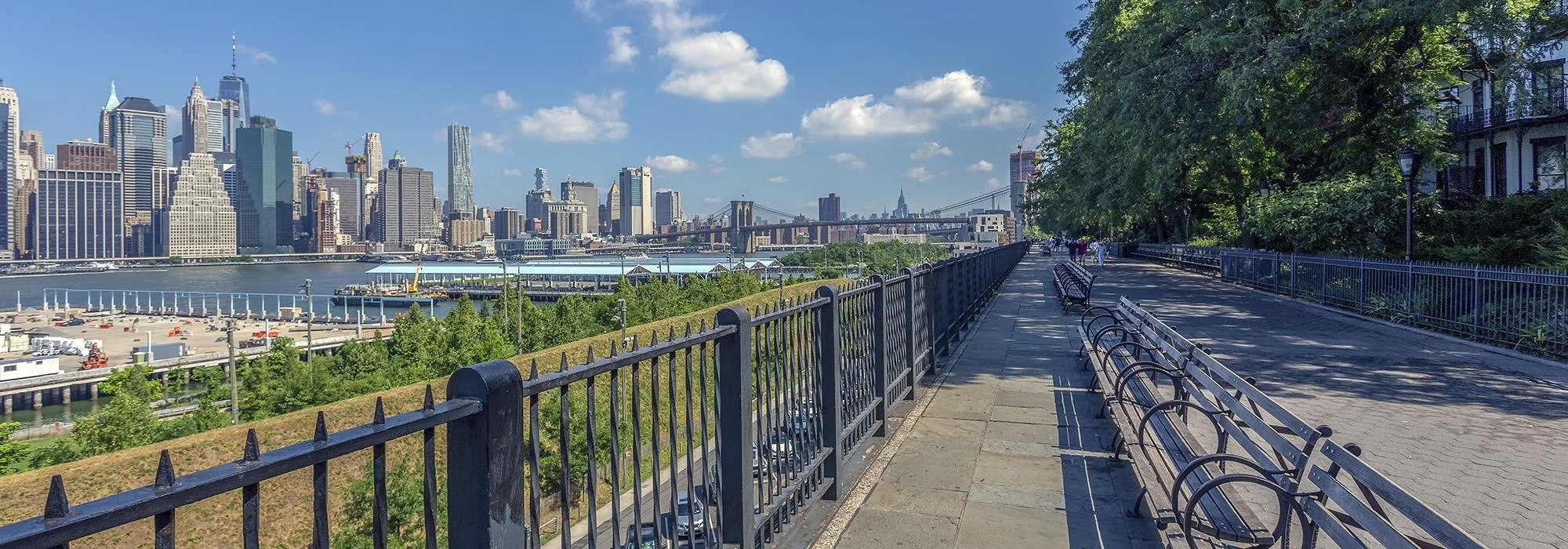
Brooklyn Heights Promenade
Elevated above DUMBO and behind stunning Brooklyn Heights brownstones is a Promenade that unveils one of the most striking vistas of the Manhattan skyline. Governor’s Island peers from the left and Jersey peeks over from the distance. Bridges both Brooklyn & Manhattan frame the centerpiece.
Directions:
Navigate to Borough Hall station in Brooklyn, which will allow you to emerge right by Montague Street. Begin your walk all the way down it , past Arthur Miller’s residence at number 62 on the left, until you reach the intersection of Montague Terrace & Pierrepont Place.
Writing Prompt:
It’s the perfect place for people-watching, sitting here it’s impossible to be uninspired. There’s no elaborate prompt needed today. Just watch and record the life surrounding you. Be curious. Look, but don’t just look. Close your eyes. Feel all the energies that you’re sharing this space and this moment with. Pick up your pen. Write… Oh & if you see a poet, ask them for a poem!
Hashtag #PSNYPlacestoWrite when you visit our PTW Location 4.
Share what you write with us @poetrysocietyny on Instagram or TikTok so we can repost it!
Series by F.M Papaz
F.M Papaz is a Greek-Australian creative and writer who believes that there is space at the literary table for everyone and is excitedly setting up your cutlery. Her poems have appeared or are forthcoming in Wild Roof Journal, Five South & Mantissa Poetry Review amongst others. She does Editorial work for Milk Press and Tabula Rasa Review as well as being a Marketing Associate for PSNY. Connect @fmpapaz on Instagram & TikTok and visit fmpapaz.com/ings to find her monthly newsletter about living a creative life and to find her chapbook, ‘Distance Makes the Heart Grow.’

Reading Poetry as a Non-Poet
New ways of reading lend themselves to new ways of writing, and new ways of writing enriches my fiction-writing.
So although I don’t write poetry, poetry is always with me when I am writing.
Reading Poetry as a Non-Poet
by S.D Munawara
I have not written a poem since the tenth grade. From memory it was a horrible, clunky piece on World War Two for an English Assessment. Initially I obsessed over the meter, but soon after surrendered any semblance of intent or exertion. Poetry is supposed to be effortless and is inherently lawless, I thought, and that combination meant it was not for me.
I revisited poetry, this time as a reader, after graduating high school. The first time I read a full collection of poems in earnest, my perception of poetry as lax and undemanding was stripped from me entirely. It was Warsan Shire’s ‘Bless the Daughter Raised by a Voice in Her Head.’ Suddenly all I could see was the effort. Intention shone in every line, in every word, in every syllable. I am always desperate to glean the thought process of the poet. I always have questions afterwards.
This curiosity was new to me. My experience with fiction is that of the author fading slightly into the background, overridden by the story’s characters and its narrators. I can easily forget that a novel has in fact been written, but this is never the case with poetry. The craftmanship of a poem is always at the forefront of my mind. I examine the shape of it, where the poem carries its weight, how it sits on the paper. I appraise the font, the title, the absence or presence of capital letters. I am hyperaware that everything was a decision.
This in turn makes me hyperaware of my position as a reader. Poetry harkens me back to when I first learnt to sound out words, stress letters, obey full stops. The reading does not happen solely in my mind. Poetry tugs on my consciousness and forces it to notice my mouth, my lungs, my heartbeat. A poem can ground me in my body, become something biological.
I am still learning how to read poetry. Sometimes I walk into a poem cautious, like I’ve been called on to join the stage of a magic show. With a title like ‘My Father, The Astronaut,’ I don’t know what to expect, and so the only think I expect is to be surprised. I keep an eye out for sleight of hand, for misdirection, but the poem is usually cleverer than I.
Other times, I treat a poem like an exhibition. I wander through ‘Bless our CCTV Star’ like every word is framed, squint for contextual information in the title, or the glossary, or the author’s biography. I linger.
I try to take cues from the work itself. Does the poem demand speed? Halfway through
Shire’s ‘The Baby-Sitter’s Club’ I let my eyes jump ahead and carry as many words as they
can manage.
my white body, in my white underwear,
sprawled on white sheets, the white light
of the sun shining through white linen
drapes, beyond which white clouds
are punctured by a white god
Does the poem ask for scrutiny? Will I need a trail of breadcrumbs to find my way back to meaning? I read ‘The Abubakr Girls are Different’ once again, with new eyes, when I reach the last stanza.
We lie in bed beside each other, holding mirrors
to the mouths of our skirts
comparing wounds
Sometimes I can feel, with giddy anticipation, that a poem is rising up to grab me by the shoulders mid-sentence and twist, confronting me with an entirely different view. I hold my breath through the glittery wedding imagery of Shire’s ‘Buraanbur’ until the very last line, where she writes:
Adorned in gold, my mother the child bride sits to the side, unsmiling, unbreathing.
My premature assessment of poetry as a teenager, that it was not for me, could not be more wrong. Poetry is for everyone, and it is especially well-suited for writers seeking to expand and better their craft.
Here are three ways Poetry can benefit every genre of writer:
1) Reading poetry will enlighten you to how much meaning and tone can be conveyed in a single word. I find myself now approaching a short story draft not only with plot-points, characters, and ideas, but also armed with specific language. Poets will show you how easily and how often a word, rather than a sentence, can do the work for you.
2) Poetry will reignite an appreciation for variety. A collection of poetry will always feature poems of wildly different styles. Writers of other forms could benefit greatly from similar diversity, and reading poetry will inspire you to write scenes that differ in shape, pace, and language, not just subject.
3) Finally, poetry is a spectacular reminder that writing is only half of the work. Poets put remarkable amounts of trust in their audience to construct, to interpret, and to apply themselves genuinely to the process of reading. When you read poetry as a non-poet you recognise how exhilarating and rewarding it is to fill the gaps the poet has left for you. Having this skill means you too can apply a similar spirit of collaboration to works of fiction or non-fiction, and learn to view readers not just as an audience but as active agents.
As I read more poems, I will be further introduced to new ways of reading. New ways of reading lend themselves to new ways of writing, and new ways of writing enriches my fiction-writing.
So although I don’t write poetry, poetry is always with me when I am writing.
Written by S.D Munawara
S.D is student of literature and an emerging writer, living, working, and writing in Melbourne, Australia. In 2022 she was the winner of the Hachette Australia Prize for Young Writers for her non-fiction piece 'Mental Funerals'. She has since published both fiction and non-fiction, and recently featured in the 2024 Nillumbik Prize Anthology.

How To Write a Love Poem: Theory, Steps and Template
There are infinite ways to write a love poem. These are examples of directions, but even writing your lover’s name twenty times on your notebook is a love poem.
How to Write a Love Poem: Theory, Steps, and Template
by Jonathan Burkhalter
Theory
When I think of love poems, a few people and their work come to mind immediately. Firstly, Katie Farris’ A Net to Catch my Body in its Weaving– in which she poses an important question: “why write love poems in a burning world?” Perhaps it’s best to start here, because if we can’t answer that, we have no business doing this. Whether or not you think art is political (it is), we must first have our own charter for this task.
Among the dystopian plotline of genocides masked as wars, while rappers beef and the super rich spend nearly twice my year’s salary on a single seat at the Met Gala and Lord knows how much on outfits (happy teacher appreciation week, everyone, by the way), we must answer for ourselves why we write, what moves us to write.
Maybe the answer sounds something like: because the lack of love or in vacuums where love is not present, we are only left with horrors. Personally, I write love poems because without everyone who has loved me, I don’t think I’d be alive. And I don’t mean just lovers, because love isn’t only romantic. Love poems are for friends, family, people you saw once on the train, crushes, or even the squirrel that stole my granola bar one morning.
To continue with Katie Farris’ same collection, she included, “Rachel’s Chair”, which is direct, humorous and a bit randy. The power of this poem comes from its simplicity and honesty. It is hinting at a lifetime of love without expressing too much. I don’t think Farris’ poem is in juxtaposition to another favorite love poem of mine, but perhaps offers a different direction. Matthea Harvey’s “In Defense of Our Overgrown Garden” is sprawling, restless, yet succinctly universal in a way that love can require the capital letter. On first read, one could be forgiven for not expecting it to be a love poem until roughly the 15th line. The bounding whimsy and beauty envelopes the speaker’s intentions for their subject.
There are infinite ways to write a love poem. These are examples of directions, but even writing your lover’s name twenty times on your notebook is a love poem. In the end, it’s the ink that proves the simplest fact of all– that you were there, you felt something real once, maybe twice. Documentation is another thing that a love poem must address. A love poem should wake us up! Wake us up with the unique language shared between loves. The first date, the animal that means something deeper because…, the emoji, that time that…, etc. Wake us up from the burning world.
I’m back to circling the drain on WHY and not HOW. Perhaps we need to keep one eye focused on each.
How to write a love poem: Step-by-step
Step 1– Answer why.
Step 2– Think of a time and place or images that matter to your love. In other words, access the language that you and your subject share.
Step 3– Never speak for your subject or objectify them or deny them a voice. For more information, read what Rae Armantrout has to say.
Step 4– Use concrete imagery whenever possible. Look at Aria Aber’s “Waiting for Your Call”, in which she says, “My phone notes littered with lines like Beauty will not save you. / Or: mouthwash, yogurt, cilantro.”
Step 5– Open with a banger if you can. For example, look at Maggie Nelson’s Bluets, in which she opens with, “Suppose that I were to begin by saying I’ve fallen in love with a color”.
And if you really would like an outline, I made a guide that was inspired heavily by Oliver Baez Bendorf.
I’ll leave you with this.
Confession PrompT
After Oliver Baez Bendorf
If we ever _______________
an observation
a negation
zoom out
A rose is _______________
a confession
a question
another question
a) Another question b) zoom out c) an observation
a line that uses an exclamation point
a summary of what love is
a symbol of the space that precedes honesty
a confession
final line.
Writer Bio
jonathan burkhalter is a writer, event coordinator, teacher, and editor. they hold an mfa in poetry from sarah lawrence college. they are passionate about motels, natural wine, food that moves us, and the practice of the kitchen table as a gathering place.
Still not ready to write that love poem yourself? Hire a professional!
PSNY’s poets specialize in crafting custom, bespoke poetry with your loved ones in mind. Consider commissioning a poem, or hire one of our typewriter poets for your anniversary, engagement party, wedding, lover’s birthday, or any special occasion.
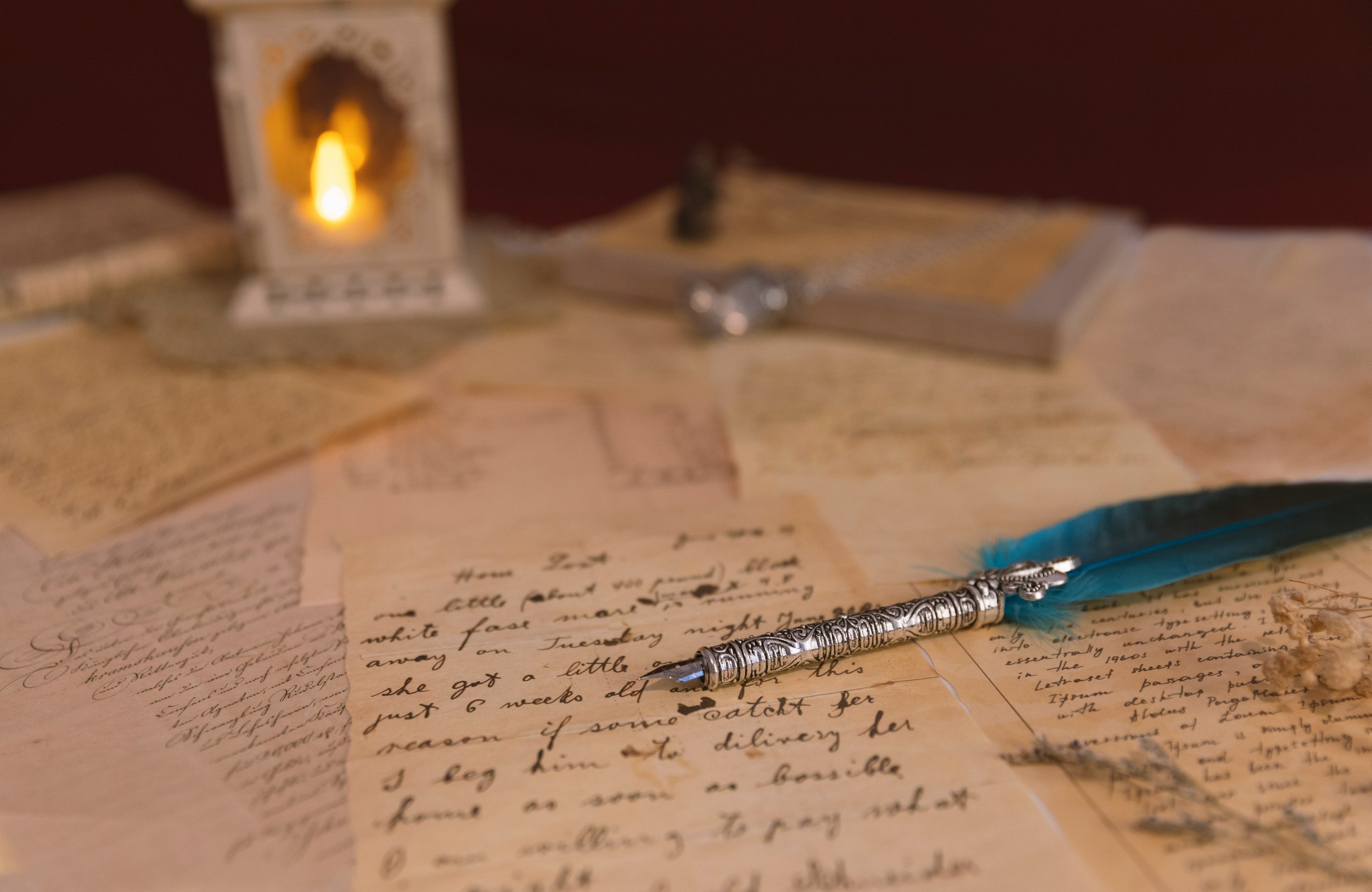
Photo by Mrika Selimi on Unsplash

Cucumbers, Pornography and Formula 1: Three Ways to Define Poetry
Whisper it: I used to hate poetry. I found verse too fey, too empty, too perfomatively artful. Then I realised two things: A, I was an idiot and B, poetry was everywhere.
Whisper it: I used to hate poetry. I found verse too fey, too empty, too performatively artful. Then I realised two things: A, I was an idiot and B, poetry was everywhere. In Alanis Morissette lyrics, in faded graffiti tags, in snippets of old movies. I mean “Of all the gin joints in all the world, she had to walk into mine” — it’s the kind of sonnet opener Shakespeare would have killed to write, no?
But the more I dived into the art, courtesy of a Masters in Creative Writing course, the more I realised something. Compared to other literary forms, poetry is the most concerned with unravelling what defines it. Grappling with its genre like a snake eating its own tail.
Yet while most definitions are artful and vivid, they can lean towards the esoteric. A line often tagged to writer Jean Cocteau, for example, notes that “the poet is a liar who always speaks the truth.” A better bon mot than it is a definition.
In a bid to get to grips with my fledgling poetry, I figured I’d take a stab at three analogues of my own. You may find them equally unhelpful, and what’s wrong with that? Ask ten people to define love and you won’t get the same answer. The richest concepts are the hardest to unpack. The ephemeral, slippery nature of poetry is its key, and maybe the point isn’t to successfully unlock it, but to enjoy trying.
Here they are:
1. Poetry is Like a Cucumber (Words with the Water Squeezed Out)
There is power in the act of condensing. Have you ever pickled anything? Leave a cut cucumber swimming in salty brine for ten minutes. Return to it, and the flavor is intensified threefold. A cucumber that has lost all its excess, flushed the water away and retained what is essential. That’s what poetry is to me, compared to say, a novel. The poet cuts away every syllable that isn’t needed, so the reader is left with the fullest taste imaginable.
2. Poetry is Pornography (It's Slippery Stuff)
There’s a famous quote from a Supreme Court judge who, overseeing an obscenity trial and asked how he defined pornography, sputtered “I know it when I see it.” A line that has the pulse of poetry itself, no? And the gleam of truth. We know poetry when we see it. Perhaps that’s the most important test of all; if it echoes against the little bones in our ear that react to poetry.
3. Poetry is Engine-Noise (We're Here for the Sound)
Fiction, nonfiction, flash fiction — these matters are concerned with happenings. They are plot-forward, concerned with propulsion. A big-nosed street racer, urging on the guy behind the wheel (that’s you, reader).
Now poetry, it moves forward too. Things happen: wheelbarrows stand in the rain. Ravens cry “nevermore”. Travellers choose between two paths in the wood. The difference is that we’re here for the journey, not the destination. The plot can take a back-seat: we want the noise of the engine and the way it makes those hairs rise. You know, the ones on the back of your neck.
Written by Daniel Seifert - Member of PSNY
Become a Member with PSNY and gain the opportunity to submit your writing to How to Poet. Find out more here: PSNY Membership.
Writer Bio: Dan's writing is published or forthcoming in The New York Times, Consequence, Open: The Journal of Arts and Letters, and the anthology Missed Connections: Microfiction From Asia. In 2023 he was shortlisted for the Bridport Prize, and longlisted for the Letter Review Prize. He is currently undertaking a Masters in Creative Writing at Lasalle College of the Arts in Singapore. Find him on Twitter @DanSeifwrites

PSNY's Places to Write #3
As much as there’s plentiful opportunity to be inspired in darling NYC, often quiet times to write are harder to come by. We’re launching this series on First Mondays as a monthly reminder to take some time out for the poet in you. Carve out some you-time and head down to this month’s PTW spot & give this Prompt a free write.
Greenacre Park
Directions: Find your way to Midtown on 51st Street between 2nd and 3rd Ave. There you will discover a beautiful hidden gem nestled in the middle of the city.
Writing Prompt:
The eye-catching centerpiece of the park will drown out the usual sounds of the city with rushes of water.
Water has so many functions and properties. It can cleanse, drown, lift up, restore and calm us.
Focus on the soundtrack of this place & ask yourself: What does your body need from the water today?
Do you need the trickling streams to carry something away? Or the force of its waterfall to wash you clean?
Hashtag #PSNYPlacestoWrite when you visit our PTW Location 3.
Feel free to share what you write, we’ll repost it @poetrysocietyny.
Series by F.M Papaz
F.M Papaz is a Greek-Australian creative and writer who believes that there is space at the literary table for everyone and is excitedly setting up your cutlery. Her poems have appeared or are forthcoming in Wild Roof Journal, Five South & Mantissa Poetry Review amongst others. She does Editorial work for Milk Press and Tabula Rasa Review as well as being a Marketing Associate for PSNY. Connect @fmpapaz on Instagram & TikTok and visit fmpapaz.com/ings to find her monthly newsletter about living a creative life and to find her chapbook, ‘Distance Makes the Heart Grow.’

Fools (and Foolishness) in Poetry - By Joshua John Smithe
History has taught us that poetry is a serious sport which is supposed to work around themes of romance, political commentary, death, and creative descriptions of sunlight entering windows.
Where does humour belong in poetry?
Everyone knows poets don’t get into poetry to make money. But we also know no one gets into poetry to make people laugh.
History has taught us that poetry is a serious sport which is supposed to work around themes of romance, political commentary, death, and creative descriptions of sunlight entering windows. And since poetry’s inception, thought to date back 2500 to 3000 years BC with the carving of “Hymn to the Death of Tammuz” into a tablet of clay, never has one, feeling a little low in mood and in need of a good laugh, raised an index finger in the air and thought, ‘Ah, yes, poetry, that oughta do it.’
So where does humour belong in poetry?
In so many places. And for so many reasons. I’ll discuss some with you now.
Poets certainly aren’t known for their hilarity. When you picture a poet, an image of elbow patches and male pattern baldness may come to mind, perhaps a greying woman with tiny glasses, or a guy with a goatee and a beret who speaks no French mansplaining Proust.
These present as largely unfunny characters, it must be said. I personally don’t know any poets who are also stand-up comedians, though many poets are creatures of quick wit.
Humour, being a natural device for ducking and weaving around emotionally difficult situations in my daily life with amusing or sarcastic comments, could not help but burst through the door into my writing. So, if for no other reason than this, humour belongs in poetry if it serves that originating purpose of revealing our inner self.
But as for the ducking and weaving, I suppose that’s one of the reasons humour exists in poetry: a way of getting to or accessing harder, less funny things.
Philip Larkin’s most famous poem This Be The Verse, for instance, opens with this stanza:
‘They fuck you up, your mom and dad / They may not mean to, but they do / They fill you with the faults they had / And add some extra, just for you.’
A pretty whimsical approach to the subject matter of generational trauma, if you ask me. But the comic spirit feels right.
I also tend to think that good poems move and swerve around, and humour is one way for taking a poem in a different direction. In the sonnet form, we know the volta is the turn of thought or direction, in Petrarchan or Italian sonnets it happens between the octave and the sestet, and in Shakespearean or English before the final couplet (funny, right?).
We can go as far back as Shakespeare, to Sonnet 130—in which Shakespeare describes his mistress as a wiry haired, smelly woman with dull boobs, putting the brakes on just before the end to declare that despite her apparent vulgarity, their love is beautiful and worthwhile after all—to see how turning poems into and and away from humour has been a technique for quite some time. Or maybe Shakespeare just grew bored with comparing his lovers to particularly seasonal days, who really knows?
My personal favourite example of this technique is a poem called What I Want by George Bilgere, though I won’t spoil the fun by giving away the joke.
A poem’s premise can also be amusing, focusing in on some minor detail to comedic effect, of which Billy Collins is an expert. His poem titled I Chop Some Parsley While Listening to Art Blakey’s Version of “Three Blind Mice” begins: “And I start wondering how they came to be blind.” The entire poem then becomes an investigation of this thought…
“Was it a common accident, all three caught / in a searing explosion, a firework perhaps? / If not, / if each came to his or her blindness separately, / how did they ever manage to find one another? Would it not be difficult for a blind mouse / to locate even one fellow mouse with vision / let alone two other blind ones?”
If anyone has ever said to you, ‘Do you want to hear a joke?’, you’ll know that the question almost invariably defeats the possibility of laughter. It is the wet blanket of comedy. As with humour in life, humour in poetry seems to prosper in its spontaneity.
I would refer to Charles Bukowski as someone who seemed to enjoy dramatizing the reveal of humour in his work. His poem 8 count is short enough for me to include in its entirety.
“from my bed / I watch / 3 birds / on a telephone / wire. / one flies / off. / then / another. / one is left, / then / it too / is gone. / my typewriter is / tombstone / still. / and I am / reduced to bird / watching. / just thought I'd / let you / know, / fucker.”
That said, a poem’s title can signpost playfulness to come.
Sharon Olds’ poem The Pope’s Penis amuses me before I begin, and delivers on its promise with the opening lines:
“It hangs deep in his robes, / a delicate clapper at the center of a bell.”
So too does the poem To the delete button by Matthew Yeager, an ode in praise of the backspace key, which says, “you have changed / literature like the pill / changed sex”.
I’ll leave it there. The next time you sit down to write poetry, don’t be shy to think about laughter as a response as worthy as someone thinking your poem is smart or meaningful, doing your bit to help to shift the public image of poets away from the pretentious few who in conversations at parties across the world are dragging our good name through the mud.
_
Joshua John Smithe is a poet and writer from Melbourne, Australia. See more of his work at: https://www.joshuajohnsmithe.com/
PSNY's Places to Write #2
As much as there’s plentiful opportunity to be inspired in darling NYC, often quiet times to write are harder to come by. We’re launching this series on First Mondays as a monthly reminder to take some time out for the poet in you.
Carve out some you-time and head down to this month’s PTW spot & give this Prompt a free write.
Aye Simon Reading Room
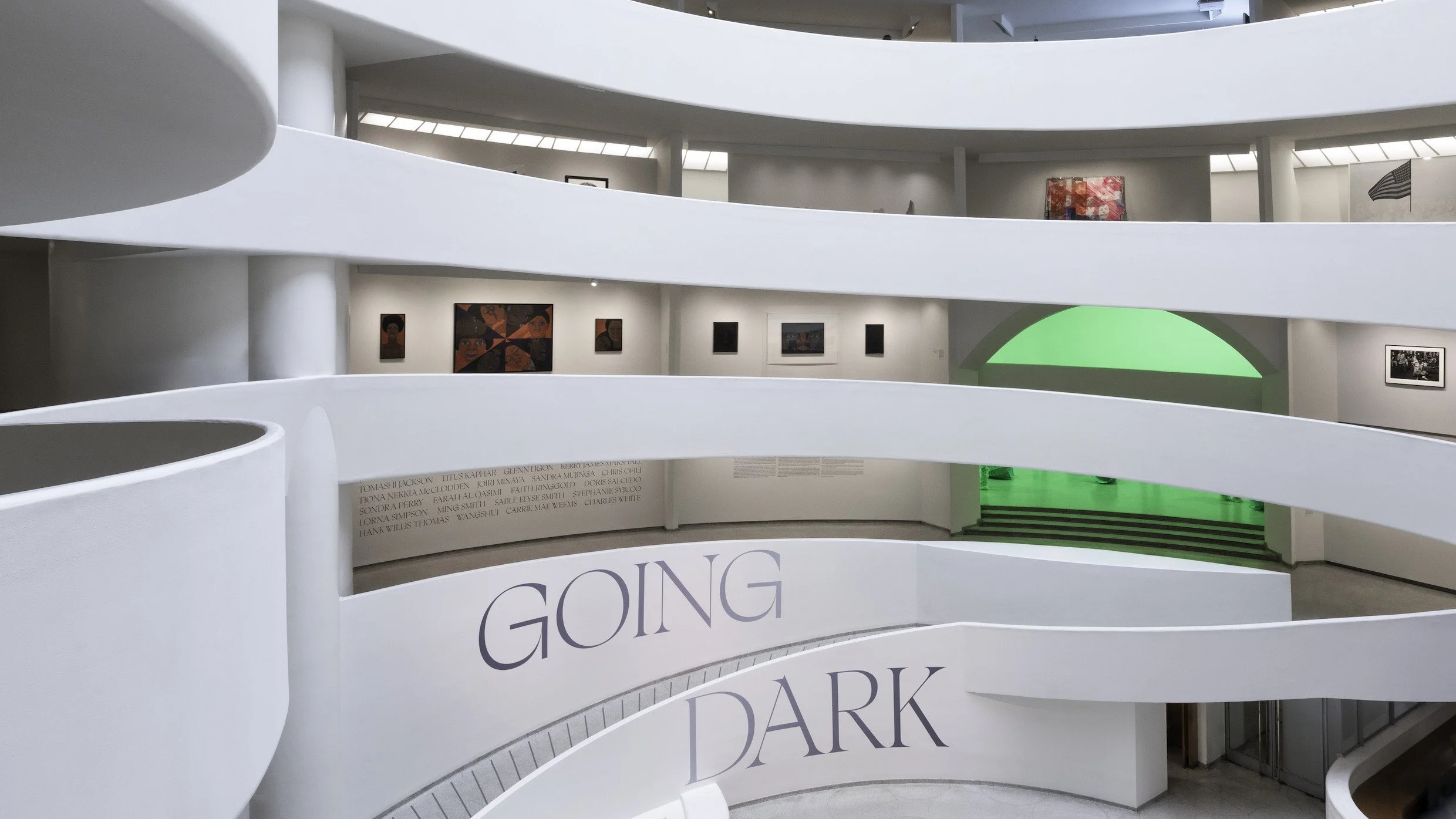
Directions: On the corner of 5th & E 89th, you’ll find the entry of the Solomon R. Guggenheim Museum. Grab a $30 ticket and head inside to the iconic atrium designed by Frank Lloyd Wright. As you travel up the Level 1 ramp, halfway up you will find a semi-circle opening on your right that leads to the Aye Simon Reading Room.
Writing Prompt: You have the option within the room, to peruse the many art and poetry books for inspiration. In 2023, Ama Codjoe was the Poet-in-Residence of the Museum. There are materials within the Reading Room that she created. A screen with headphones to the back of the room, will offer you options to listen to poems Ama has written as well Writing Prompts she created during her residency.
Alternatively, take a walk around the museum and take in the artworks, paying special attention to shape.
Shape makes this museum everything that it is.
Artworks you’ll find also reflect their nature, in the form the artists have chosen to present them in.
Create a poem whose form reflects its nature.
Hashtag #PSNYPlacestoWrite when you visit our PTW Location 2.
Feel free to share what you write, we’ll repost it @poetrysocietyny.
Series by F.M Papaz
F.M Papaz is a Greek-Australian creative and writer who believes that there is space at the literary table for everyone and is excitedly setting up your cutlery. Her poems have appeared or are forthcoming in Wild Roof Journal, Five South & Mantissa Poetry Review amongst others. She does Editorial work for Milk Press and Tabula Rasa Review as well as being a Marketing Associate for PSNY. Connect @fmpapaz on Instagram & TikTok and visit fmpapaz.com/ings to find her monthly newsletter about living a creative life and to find her chapbook, ‘Distance Makes the Heart Grow.’

Poetry is Magic: My First Intensive Poetry Class by F.M Papaz
Up until then, how I conducted myself in poetry had come from an intuitive place within me that was difficult to regale. The amazing part of getting into Theory was the discovery and affirmation that the craft of poetry does have this spiritual origin and operation to it that lives within and is executed by the Poet.
Artwork: The Improvement by René Magritte
After taking a few PSNY Virtual Workshops here and there from 2022 to mid-2023, I decided to take the plunge and sign up for a Milk Press Intensive. I have never studied poetry formally, by that I mean, beyond high school. I was yearning for more insight into the Craft of poetry & also to know how the poems I’d been writing the past couple years, read to people who read poetry (no shade to my Mum and besties, your feedback has been great).
I got so much more than I bargained for. I discovered, Poetry is Magic.
The Summer Intensive was taught by the remarkable Jackie Braje. The reverence she holds for poetry allows her to hold space for everyone regardless of poetry experience but also to expect that we engage with the material and challenge our preconceived notions. Each week she curated thought-provoking readings and poems to initiate discussions. We workshopped our poems with these readings in mind.
Up until then, how I conducted myself in poetry had come from an intuitive place within me that was difficult to regale. The amazing part of getting into Theory was the discovery and affirmation that the craft of poetry does have this spiritual origin and operation to it that lives within and is executed by the Poet.
We spoke about Voice, Form, the Line and Method in Poetry and common to all of these devices is the imploration that these poetic tools lead you more than you lead them. You must be open to discovering the ecosystem that already exists, more than you are creating something that did not exist prior to your writing about it.
Barbara Guest challenges us to “[lose] the arrogance of dominion over the poem to an invisible hand” because while “the poet campaigns for a passage over which the poet has control..[the] unstableness of the poem is important. Also the frequent lapses of control.”
Alice Notley acknowledges that “there is no way not to impose yourself as an author on your material” but also that the Voice of the Poem “seems to have come into existence just a moment prior to the poem” and “is really only for the poem.” “The things that are said in poems are for poems - for the unity of the occasion of a poem, which is made by one poet only. In life one person blends with another, but rarely in poetry…each [poem] is a cosmos.”
As a poet, I am seeing myself more and more, not as a creator, but a conduit or a channel.
Anne Carson’s ‘Notes on Method’ distilled this epiphany to me with the inclusion of György Lukács’s philosophical statement “I do not want to be a windowless monad.” Carson speaks about the poem being reflective of “withness.” In these two concepts, I understand my role. A poem is two entities, a part of the poet’s ‘Self’ and the ‘cosmos’ they have discovered and positioned themselves ‘with’ in the container of the poem. I must allow the reader to look through a part of me, to see what scenery I have sought out and sat ‘with’ on the other side.
In short, Poetry is Magic.
Works Referenced:
Barbara Guest, Invisible Architecture
Alice Notley, ‘Voice’ from ‘Coming After’
Some Notes on Organic Form by Denise Levertov
On the Line by Stacy Szymaszek
Notes on Method by Anne Carson
Writer Bio
F.M Papaz is a Greek-Australian creative and writer who believes that there is space at the literary table for everyone and is excitedly setting up your cutlery. Her poems have appeared in Wild Roof Journal, Mantissa Poetry Review and The Victorian Writer. She does Editorial work for Tabula Rasa Review and Milk Press. Connect @fmpapaz or fmpapaz.com/ings to find her monthly newsletter about living a creative life.

Poetry Opens Up the World, Like Spring
Spring is nature’s manifestation of that experience. It is the reminder that although there has been a prolonged period of darkness, the long light also comes. With this reminder, poetry is the gift of clarity to capture and articulate all of the wonder this life holds.
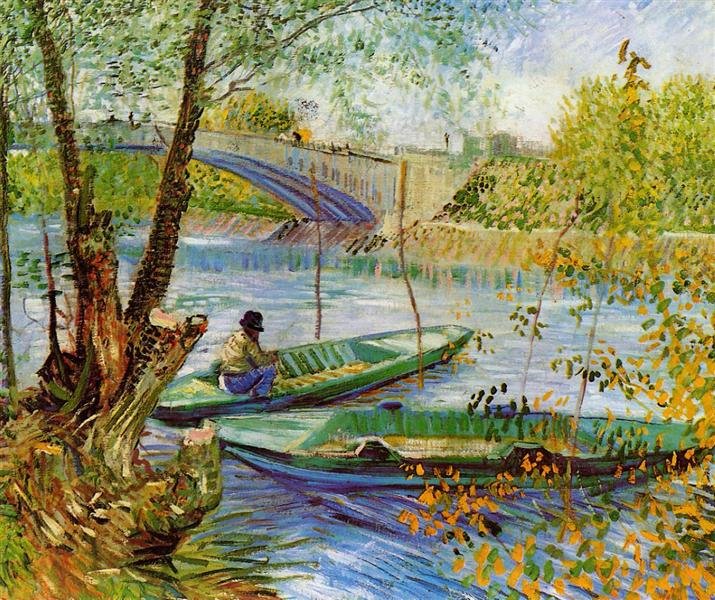
Fishing in the Spring, the Pont de Clichy (Asnires) 1887 - Vincent van Gogh
Well, who doesn’t want the sun after the long winter? From “Spring” by Mary Oliver.
Within the poem “Spring,” Mary Oliver likens the coming of spring to the serpent emerging from his “winter-death” and searching for the sun. But, even more, his search for the sun is not simple or easy. This metaphor struck me. I have felt like that serpent, having been in a cave, unable to find that euphoric feeling of connecting to the world. I have waited and waited through the long winter, and now I am searching for the sun. This is because to me, poetry opens up the world, like spring. It brings color and extended light. It ushers in rebirth, growth, and fruitfulness.
Poetry has consistently been the light that I search for as I emerge from the dark, cold cavern of my mind. When I read poems that put feelings into words, it is illumination. Spring is nature’s manifestation of that experience. It is the reminder that although there has been a prolonged period of darkness, the long light also comes. With this reminder, poetry is the gift of clarity to capture and articulate all of the wonder this life holds.
Even now, the birds are singing their soft songs. The sun has not yet performed its graceful bow to the horizon. The day is longer. I find comfort in knowing that the world continues to open itself up to us. Our imaginations, the fertile grounds ripe for planting. Poetry is the budding garden.
It is during this time that I feel the most joyful and delighted. May poetry continue to tend to us and feed us new light, as spring does. May you, too, go about singing your soft songs. They are little gratitudes that we can give the earth for its promise of spring after the dark, cold cavern of winter. May poetry continue to help us emerge from ourselves.

Ebony Kenae (ekg) is a poet and writer who was born and raised in Paterson, NJ. Following her fascination with outer space, her poems center on what connects us to the seemingly grand and the ways in which we are little planets too. Her poems have appeared in Mixed Mag, Harness Magazine, and elsewhere. When she is not writing, she loves reading and sharing her thoughts on her Youtube channel and TikTok.

Feeling Like a Poet
A poet is a person that feeds themselves and others with words from a language that they manufacture, a language that each poet births as their own.
Written by Joelis Rodriguez
Header Image: Self-Portrait with Thorn Necklace and Hummingbird (Autorretrato con Collar de Espinas) 1940 Frida Kahlo
In the public sphere, a straightforward conclusion is drawn about the vocation of the poet: too emotional. They’re penniless! Get a real job! The jokes are endless. But I’m here to argue our right to exist, and exist with feeling. What does it mean to feel like a poet? To be a poet, with feelings?
A poet is a person that feeds themselves and others with words from a language that they manufacture, a language that each poet births as their own. It is time that, as poets, we embrace our blessing and curse of feeling intensely. It is the fire that engraves our pages as we write. It’s the voice that camouflages in between letters, tangling words, creating sentences. It’s the children inside of us, treating stanzas and rhymes as building blocks. It’s the roots that molded us into what we are today: intense poets living in an intense world where literature is not appreciated.
Feeling like a poet is translating life into verses. We highlight uncomplicated scenarios and turn them raw. Dissecting contrasting emotions and molding them into our favor creates a pathway for poets to express themselves. There are no rights and wrongs while writing poetry. It is only you, your emotions, and an empty piece of paper. No one can dictate the way you feel. There is no shame in feeling. Feel like there are no consequences, like the only world that matters is the one you’re creating.
The world of poetry is enchanting. It’s made up of time periods, all the way from Shakespeare’s sonnets to contemporary free verse. It’s a majestic place of different forms that would never let the reader stand in trial. There is no judgment.. Everything is raw. Just break this stanza here, create a new verse there, even make the first stanza your title, because rules are not the point here.
Expert from Aimee Nezhukumamathil’s When You Select the Daughter Card
By seeking
to understand and accept the more salty aspects
of yourself, you might grow another arm or leg,
pointing at your truest love. If you fear that you
have not fully accepted all the many hard
and wondrous ways you are loved, don’t siphon
away your frustration.
Allow yourself to visit the poetry world and feel. Let your bare feet touch the fictional rough and prickly green grass and feel. Tear it out with your bare hands and allow your fingers to get cuts and feel.
Feel.
Feel.
Feel.
Feel until your physical body cannot hold for any longer. Feel until your brain enters another dimension. Feel until poetry removes the numbness that our world has to offer. Don’t be scared and just feel. Feel until the pen on your hand runs out of ink.
Joelis Rodriguez is a born & raised Puerto Rican poet who uses poetry as a refuge from real life. Through verses, she desires to represent her heritage and raise awareness to the past and present events happening in the small Carribean island. She currently studies at Stony Brook University, majoring in Creative Writing & Literature with a minor in TV writing. When she’s not reading or writing, you can find her at the beach collecting seashells or singing her heart out at some concert.

PSNY's Place to Write #1
Carve out some you-time and head down to this month’s PTW spot & give this Prompt a free write.
As much as there’s plentiful opportunity to be inspired in darling NYC, often quiet times to write are harder to come by. We’re launching this series on First Mondays as a monthly reminder to take some time out for the poet in you.
Carve out some you-time and head down to this month’s PTW spot & give this Prompt a free write.
Directions: Take the B/D/F/M or 7 to Bryant Park Subway Station. Enter the Public Library via 5th Ave and take either staircase from the gorgeous stone lobby, up two flights to the top floor, a very mahogany landing spot with frescoes upon the ceilings and two rooms on either side. The Reading Room has a security guard who you tell the top-secret code, “I’m just here to study” to be let through. Find a seat beneath the clouds.
Your Prompt
The entrance to the Rose Main Reading Room bears an Olde English version of this inscription:
A good book is the precious lifeblood of a master spirit, embalmed and treasured up on purpose, to a life beyond life.
Let this quote guide a free write for 25 minutes. What would an examination of your own blood yield, what gives it life? What runs through it? Genetically, emotionally, spiritually.
When that blood stops flowing, what lives on about you? What treasures? What is there to embalm?
Hashtag #PSNYPlacestoWrite when you visit our PTW Location 1. Feel free to share what you write, we’ll repost it @poetrysocietyofny.
Series by F.M Papaz
Directions to The Rose Main Reading & a Prompt for this month’s PSNY ‘Places to Write.’
F.M Papaz is a Greek-Australian creative and writer who believes that there is space at the literary table for everyone and is excitedly setting up your cutlery. Her poems have appeared or are forthcoming in Wild Roof Journal, Five South & Mantissa Poetry Review amongst others. She does Editorial work for Milk Press and Tabula Rasa Review as well as being a Marketing Associate for PSNY. Connect @fmpapaz on Instagram & TikTok and visit fmpapaz.com/ings to find her monthly newsletter about living a creative life and to find her chapbook, ‘Distance Makes the Heart Grow.’